

 English
 日本語
 한국어
Industry News
 Home / News / Industry News / Compressed Air for Pulp and Paper Manufacturing: A Practical Mill Guide
Compressed Air for Pulp and Paper Manufacturing: A Practical Mill Guide
 2026.11.06
 Industry News
Content
- 1 Where compressed air is used in pulp and paper manufacturing
- 2 Air quality matters more than installed capacity
- 3 A paper mill is harder on compressors than a general factory
- 4 Sizing, leaks and heat recovery: where the savings sit
- 5 What tissue buyers should take from this
- 6 Frequently asked questions
Compressed air is the utility a tissue mill notices only when it fails. One paper machine can draw 60 to 120 cubic metres of air per minute at 6 to 8 bar to keep felts conditioned, webs stable and converting lines moving, and that load rarely sits below 10 percent of the plant electricity bill. A one-bar drop at the header is often enough to trip trim handling or to leave a dust streak on the sheet.
This guide covers where the air actually goes in a pulp and paper mill, what the specification should say about air quality, and which efficiency measures pay back within a normal maintenance cycle. The figures below come from the practical side of running tissue and paper towel lines rather than from a compressor catalogue.
10-15%of mill electricity typically spent on compressed air
6-8 barcommon header pressure across machine and converting
1.2.1ISO 8573-1 class often quoted for sheet-contact air
20-30%of generation lost to leaks and open blowing
Where compressed air is used in pulp and paper manufacturing
Compressed air runs from fiber preparation to wrapping, but the heaviest and most quality-sensitive demand sits around felt conditioning, web stabilization and the converting lines, not in the pulping area.
Walking the mill floor, the demand points usually look like this:
- Stock preparation: dilution control, agitator seals and pneumatic conveying of broke and recycled fiber.
- Felt conditioning and cleaning showers: continuous blowing and oscillation that run every second the machine is up.
- Web stabilization and tail threading: air showers that hold the sheet against the fabric and re-thread a tail after a break.
- Dust and trim extraction at the winder, log saw and perforation units.
- Converting actuators, embossing and packaging: smaller volumes, but a stoppage here halts finished-goods flow.
- Instrument air for valves, dampers and quality control scanners.
| Application | Pressure (bar g) | What goes wrong first |
| Stock preparation and broke conveying | 4-6 | Wet air causes lumping and blocked convey lines |
| Felt conditioning and cleaning | 5-7 | Pressure swings show up as felt marking |
| Web stabilization and tail threading | 3-6 | Unstable pressure breaks the tail |
| Dust and trim extraction | 4-6 | Fiber dust blinds filters and nozzles |
| Converting and embossing | 5-7 | Oil carryover spots the sheet |
| Packaging and palletizing | 5-6 | Intermittent peaks starve other users |
| Instrument air and scanners | 4-6 | Condensate fouls valves and sensors |
Pressure stability beats headline capacity. A mill holding a steady 6 bar with modest receiver volume usually runs better than one holding 7.5 bar that swings 1.5 bar every time the log saw fires.
Air quality matters more than installed capacity
Moisture and oil cause more rejects in tissue production than a shortage of air volume, because both create defects that travel to the customer instead of staying inside the plant.
ISO 8573-1:2010 describes compressed air purity with three numbers. Class 1.2.1 means particles in class 1, water in class 2 (a pressure dew point of -40 degrees Celsius) and oil in class 1 (no more than 0.01 mg per cubic metre).
For sheet-contact and converting air, 1.2.1 is a common target. Instrument air can usually live with class 1.4.1 and a refrigerated dryer at a +3 degrees Celsius dew point. Desiccant dryers reach -40 degrees Celsius but consume 10 to 15 percent of compressor flow as purge, so pair them only with users that genuinely need dry air.
Four failures appear again and again on tissue lines:
- Condensate in cylinders and valve blocks: sticky spools, slow actuation and stops that get misdiagnosed as electrical faults.
- Oil carryover past a saturated filter: grey or brown marks that only appear after the sheet is creped.
- Fiber dust entering the intake: coolers foul faster and discharge temperatures climb across a shift.
- Wet air in pneumatic conveying: lumps, blockages and manual rodding on the weekend shift.
A paper mill is harder on compressors than a general factory
A paper mill combines sustained full load, high ambient temperature and airborne fiber dust, which is a very different duty cycle from a plant that only fires short actuator strokes.
HeatMachine halls reach 40 to 45 degrees Celsius near the dryer section. A package rated at 25 degrees Celsius delivers measurably less flow as ambient climbs.
Fiber dustDust coats coolers, filters and fan blades. Maintenance intervals that work in clean assembly halls fall short on a converting floor.
Load swingsLog saws, winders and packaging lines switch in seconds, which punishes fixed-speed machines and undersized receiver volume.
Size for the worst week, not the average one. A 15 to 20 percent capacity margin calculated at the real design ambient temperature costs far less than a production stop on a hot afternoon in August.
Sizing, leaks and heat recovery: where the savings sit
Most mill air systems can cut energy by 20 to 30 percent without touching production, because demand-side losses are usually larger than any inefficiency inside the compressors themselves.
Typical split of losses in a mill with no active leak programme:
A practical sequence that keeps the numbers honest:
- Log header pressure, flow and dew point for a full production week, including one grade change and one wash-up.
- Tag leaks during planned stops and repair them in the same shutdown; a mill with several hundred quick couplings often recovers 10 percent of flow at once.
- Reduce header pressure by 0.3 bar at a time and watch the most sensitive users, typically tail threading and scanners.
- Recheck specific power in kW per cubic metre per minute after each change, so the gain is documented rather than assumed.
Heat recovery is the quiet win. A water-cooled or air-cooled package can return 70 to 90 percent of its input energy as hot water at 50 to 70 degrees Celsius, and a tissue mill always has a use for warm water in pulping, cleaning or boiler feedwater preheating.
What tissue buyers should take from this
Air and dust control show up in the finished product, so a tissue buyer can partly judge a supplier on how well the mill manages compressed air, dust and moisture.
A clean sheet starts upstream of the converting line. Mills that keep oil out of the air and fiber dust out of the hall generally produce fewer spots, fewer web breaks and more consistent roll density.
- Ask whether sheet-contact air is oil-free or filtered to ISO 8573-1 class 1 for oil.
- Check how dew point is controlled in humid months, not only in dry winter air.
- Look at dust extraction at the log saw and perforation units, where contamination enters the finished roll.
- Confirm maintenance records for dryers and filters, since a saturated filter is the usual cause of sudden oil spots.
Our own lines in Nantong run on these principles, and the factory overview shows how converting, dust control and packaging are laid out, while the technology section goes deeper into process control.
For buyers comparing finished goods, the output of that process looks like this:
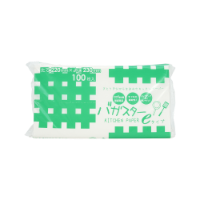 Sugarcane Pulp Kitchen Paper for Oil AbsorptionMade from sugarcane pulp, this kitchen paper is presented for buyers comparing finished goods and is suited to grease absorption, wet cleanup and durable wiping.View Product →
 Biodegradable Sugarcane Pulp Hand TowelsMade from sugarcane fiber, these biodegradable hand towels offer softness, strength and absorbency for buyers comparing finished goods for public washroom settings.View Product →
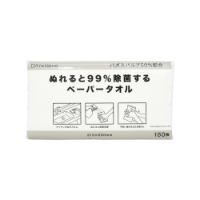 150-Pack Coated Antibacterial Hand TowelsThese 150-sheet antibacterial hand towels use added agents and surface treatments for hygienic hand wiping, offered to buyers comparing finished goods for hygiene-sensitive settings.View Product →
Frequently asked questions
The short version: specify air by ISO 8573-1 class, size for hot ambient conditions, and repair leaks before anyone signs off on extra compressor capacity.
What pressure do pulp and paper mills normally run compressed air at?
Most machine and converting users sit between 5 and 7 bar at the point of use, with a 6 to 8 bar header to cover distribution losses. Running the header above the highest genuine requirement adds roughly 7 percent energy for every extra bar and increases leak flow at the same time.
Is oil-free compressed air necessary for tissue production?
Not always, but it is the simplest way to protect sheet-contact points. A well maintained oil-flooded system with coalescing filters and regular oil testing can meet class 1 for oil, while an oil-free machine removes the risk of a single filter failure reaching the sheet.
How much compressed air does a paper machine need?
A tissue machine plus its converting lines typically needs 40 to 120 cubic metres per minute, depending on width, speed and how much of the felt conditioning is air-driven. The dependable figure comes from a week of logged flow, not from a catalogue table.
Can waste heat from compressors be reused in a paper mill?
Yes. Hot water recovered from compressor cooling can feed pulping, cleaning or boiler feedwater preheating, covering 70 to 90 percent of the compressor input energy. Mills that already run heat recovery usually see the retrofit pay back within two to three years.




ADD:No. 38 Huipu Road, Baipu Town, Rugao City, Jiangsu Province
Contact us
-

Tel: +86-513-88579198 88572918
-

FAX: +86-513-88572818
-

Email: info@tojin.com.cn

Copyright © 2002 - 2024 Jiangsu MIOV Paper Co., Ltd. All Rights Reserved. Recycled Paper Towel Manufacturers

