

 English
 日本語
 한국어
Industry News
 Home / News / Industry News / Wet Strength Additives for Paper: Applications, Selection Criteria, and Practical Guidance
Wet Strength Additives for Paper: Applications, Selection Criteria, and Practical Guidance
 2026.10.26
 Industry News
Content
- 1 What a Wet-Strength Additive Actually Does
- 2 Wet-Strength Resins: The Commercial Families
- 3 Wet Strength and Dry Strength Are Not Interchangeable
- 4 How Fiber Choice Shifts the Dose
- 5 Reading a Wet-Strength Spec Sheet
- 6 Production Problems and Where They Come From
- 7 Compliance, Recyclability and a Sourcing Checklist
- 8 Frequently Asked Questions
A hand towel that holds together on a wet dispenser and one that shreds into lint usually differ by less than two percent of furnish weight. That difference is the wet-strength additive, and it is one of the least documented lines on a tissue purchase order.
Untreated tissue keeps roughly 4 to 10 percent of its dry tensile strength once it is saturated. A properly dosed wet-strength resin lifts that figure to 20 to 35 percent, which is close to the practical line between a sheet that survives a wet hand and one that collapses in it.
4-10%wet tensile retention, untreated sheet
20-35%retention with a wet-strength resin
0.5-3%typical resin dose on dry fiber
For buyers sourcing hand towels, kitchen rolls or facial tissue for a restaurant chain, a hotel group or a Japanese trading house, those three numbers explain most of the gap between two quotes that look identical on paper. The sections below cover what the chemistry actually does, how fiber choice shifts the dose, and which spec-sheet fields are worth insisting on.
What a Wet-Strength Additive Actually Does
A wet-strength additive is a polymer or resin that keeps fiber-to-fiber bonds intact after the sheet is soaked, so the paper keeps part of its dry strength instead of separating back into pulp.
Two mechanisms are at work. The first protects existing bonds: the resin crosslinks around the fiber joints and shields them from the swelling that water triggers. The second adds new bonds that are themselves insensitive to water. Most commercial systems do a bit of both, which is why the same resin can nudge dry tensile upward at the same time.
Wet strength is the ratio of wet tensile strength to dry tensile strength, reported as a percentage. It is not water resistance. A treated sheet still wets out and still absorbs; what changes is whether it holds its shape while wet.
For tissue grades the split between permanent and temporary systems matters more than the chemistry name:
- Permanent systems such as PAE or melamine-formaldehyde hold their strength after hours of soaking and suit hand towels, kitchen paper and food wrapping.
- Temporary systems such as glyoxylated polyacrylamide lose strength in neutral or alkaline water, which lets the sheet break down during repulping.
- Untreated grades are engineered to disperse, which is exactly what a toilet tissue should do.
Specifying a permanent resin for a grade that has to disperse in the customer's drainage system is one of the more expensive mistakes in this category, and it usually surfaces only after the first container ships.
Wet-Strength Resins: The Commercial Families
Four synthetic families and a growing group of natural alternatives cover almost every commercial wet-strength program, and each one trades performance against cure conditions, effluent load and food-contact status.
| Family | Strength level | Cure | Main constraint |
| PAE (polyamide-epichlorohydrin) | High, permanent | Heat cure or 24-48 hours natural | AOX load in effluent, narrow pH window |
| Melamine and urea formaldehyde | Very high | Acid pH plus heat | Free formaldehyde, restricted in food contact |
| Glyoxylated polyacrylamide | Medium, temporary | Neutral to mildly acidic | Strength decays in alkaline broke |
| Polyvinylamine and PEI | Medium | No cure required | Cost and high charge demand |
| Natural polymers (starch, chitosan, CNF) | Low to medium | No cure required | Dose too high for permanent strength |
PAE still dominates tissue production because it delivers permanent strength at low addition rates. Its weak point is adsorbable organic halogen in mill effluent, which is why Japanese and European buyers increasingly ask for AOX figures next to the wet tensile data.
Wet Strength and Dry Strength Are Not Interchangeable
Dry-strength additives raise the tensile of a dry sheet, while wet-strength additives decide how much of that tensile survives soaking. They are dosed for different targets and cannot substitute for one another.
Dry-strength additives
- Starch, CMC, guar gum, cationic polyacrylamide
- Target: dry tensile, surface strength, lower dusting
- No meaningful wet retention on their own
- Overdose costs softness and absorbency
Wet-strength additives
- PAE, formaldehyde resins, GPAM, polyvinylamine
- Target: 20-35 percent retention on tissue
- Overdose stiffens the sheet and slows repulping
- Needs correct pH and cure to perform at all
Most mills run both. A dry-strength agent lifts the baseline, so a lower wet-strength dose reaches the same wet tensile. Across a 30-day trial that is usually the cheapest lever available.
How Fiber Choice Shifts the Dose
Fiber type changes how much resin a sheet needs, because fines, lignin and anionic trash all compete for the same cationic sites the wet-strength additive is trying to reach.
- Bagasse and sugarcane pulp: short fiber, high fines and strong absorbency, but a heavy anionic demand that typically pushes resin addition up by 10-20 percent.
- Bamboo: longer fiber and higher tear, so the same handling feel usually arrives at a lower wet-strength dose.
- Recycled fiber: the heaviest anionic trash load of the four; expect to raise cationic resin or add a fixative ahead of it.
- Virgin wood pulp: the most predictable response, and the reference point against which the other three should be tested.
On a bagasse-based hand towel, wet-end charge control matters more than raw resin volume. Our sugarcane pulp hand towels are built on that furnish, and they show why the two have to be tuned together rather than dosed independently.
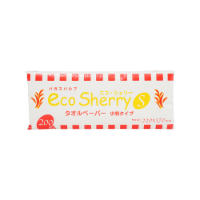 Strong Soft Sugarcane Pulp Hand TowelsFor bagasse-based hand towel ranges, these sugarcane pulp towels offer soft hand wiping and absorbency, with customizable size, weight, and packaging.View Product →
Rule of thumb: moving a hand towel from virgin wood pulp to bagasse usually holds the same wet tensile at a 10-20 percent higher addition rate, unless the wet end is rebalanced at the same time.
Reading a Wet-Strength Spec Sheet
A wet-strength specification is only usable when it names the test method, the soak time and the direction of measurement; without those three, the number cannot be compared with anything.
| Metric | Unit | What to ask for |
| Wet tensile, machine direction | N/m | Test method and soak time, such as TAPPI T456 or ISO 3781 |
| Wet to dry retention | percent | Same sample, same direction, same soak |
| Resin solids | percent | Confirms the concentration you are paying for |
| pH at addition point | pH | PAE performs best in a narrow neutral band |
| Cure schedule | minutes at temperature | Under-cured sheets fail at the edges first |
| Formaldehyde and AOX | ppm | Food-contact and effluent compliance |
Retention numbers without a stated soak time are marketing, not data. On a temporary system, two minutes and thirty minutes can differ by a factor of two.
How that wet tensile translates into real dispensing behavior is covered in this guide to absorbent paper towel performance, which is worth reading alongside any resin data sheet.
Kitchen rolls add a second requirement: the sheet has to stay intact while saturated with oil, not just water. Our strong oil-absorbent sugarcane pulp kitchen paper is designed around that combination.
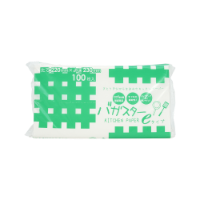 Strong Oil-Absorbent Sugarcane Pulp Kitchen PaperFor oil-heavy kitchen use, this sugarcane pulp kitchen paper is positioned for oil absorption and tough cleaning, with customizable size, weight, and packaging.View Product →
Production Problems and Where They Come From
Most wet-strength complaints trace back to pH, cure or charge balance at the wet end rather than to the resin itself, so the troubleshooting order matters as much as the answer.
- Check pH at the addition point. PAE outside its neutral band loses efficiency before it loses activity, which often looks like a dosing problem.
- Run a filtrate test. Resin left in the white water is resin you paid for and did not retain.
- Confirm the cure curve. A sheet that is dry is not necessarily cured; the crosslinking reaction needs time at temperature.
- Re-check charge demand after any furnish change. A new recycled supplier can shift demand by a full point overnight.
- Test repulpability if the grade is temporary. Lab dispersion at the customer's pH is the only number that counts.
Sheets that lose strength at the edges but hold in the middle are usually a drying-curve problem, not a dosage problem. Raising the resin dose to fix it costs money and softens the sheet at the same time.
Compliance, Recyclability and a Sourcing Checklist
Wet strength sits where food-contact law, effluent permits and recycling infrastructure overlap, and any one of those can override a technically superior resin.
- Food contact: confirm the resin appears on the applicable positive list; formaldehyde-based systems are normally excluded from direct-contact grades.
- Effluent: ask for the AOX contribution per tonne of paper if the system is PAE-based.
- Recyclability: permanent systems slow repulping, so confirm the receiving mill accepts the sheet before the grade launches.
- Certification: chain-of-custody schemes cover fiber, not chemistry, so they are not a wet-strength claim.
A short sourcing checklist: end use (permanent or temporary), furnish type, target retention with a stated soak, cure capability on the machine, and the effluent or food-contact limit that applies. Five answers eliminate most wrong shortlists.
Our own position is that fiber and chemistry have to be chosen together. The reasoning behind that is set out on our sustainability page, which covers the recycled and non-wood furnish strategy in more detail.
Recycled natural-color hand towels are the clearest example in our range: the furnish carries a higher anionic load, so the wet end is balanced differently from a virgin pulp line.
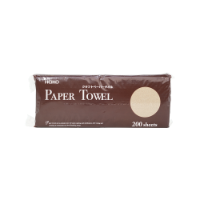 Recycled Natural Color Hand TowelsFor recycled natural-color hand towel lines, these towels retain natural color without deinking or bleaching and offer absorbency for hand wiping, with customizable packaging.View Product →
Frequently Asked Questions
Short answer: match the chemistry to the end use and the end-of-life route before comparing price per tonne.
What is the difference between wet strength and water repellency?
Wet strength keeps fiber bonds intact while the sheet is wet, so it still absorbs and still softens. Water repellency blocks liquid from entering the sheet in the first place. Tissue grades almost always need the first and never the second.
Can a mill use wet-strength and dry-strength additives together?
Yes, and most do. A dry-strength agent raises the base tensile, which lets a smaller wet-strength dose hit the same wet target. The pairing has to be checked for charge competition, because both chemistries are usually cationic.
Do wet-strength additives make paper harder to recycle?
Permanent systems do slow repulping, since the bonds are designed to survive water. Temporary systems were developed for exactly this reason and break down in neutral or alkaline conditions, which is why the end-of-life route should be settled before the resin is chosen.
How much wet-strength resin does a hand towel need?
Typical tissue doses sit between 0.5 and 3 percent on dry fiber, but the number only means something alongside the target retention, the soak time and the furnish. A bagasse sheet with high fines will usually need more than a virgin wood pulp sheet for the same wet tensile.

ADD:No. 38 Huipu Road, Baipu Town, Rugao City, Jiangsu Province
Contact us
-

Tel: +86-513-88579198 88572918
-

FAX: +86-513-88572818
-

Email: info@tojin.com.cn

Copyright © 2002 - 2024 Jiangsu MIOV Paper Co., Ltd. All Rights Reserved. Recycled Paper Towel Manufacturers

