

 English
 日本語
 한국어
Industry News
 Home / News / Industry News / Top Renewable Pulp Fibers for Tissue Mills: Bamboo, Bagasse and Recycled
Top Renewable Pulp Fibers for Tissue Mills: Bamboo, Bagasse and Recycled
 2026.10.23
 Industry News
Content
Two hand-towel samples can arrive in identical cartons, weigh the same, and still behave nothing alike at the dispenser. The difference almost always sits in a single line of the specification sheet: the pulp fiber.
Fiber choice has moved from a marketing footnote to a real procurement variable. Buyers now ask for fiber origin, blend ratio and harvest cycle before they ask for a unit price, because those answers decide whether a product can carry a plant-based or recycled claim on pack, and how it behaves once it is wet.
Bamboo culm reaches harvest in 3 to 5 years. Eucalyptus in 6 to 7. A northern softwood stand needs 20 to 60 before the first cut.
What Makes a Pulp Fiber Renewable
A renewable pulp fiber is a cellulose source that regrows on a short cycle, usually months to a few years, instead of the two to six decades a commercial softwood forest needs before harvest.
Definition
Renewable pulp fiber means cellulose taken from fast-regrowing plants, crop residues or recovered paper, where the fiber supply is restored within a single agricultural season or a short coppice rotation.
Three tests separate a genuinely renewable fiber from a convenient label:
- Rotation length. Annual residues such as bagasse and straw reset every season, bamboo runs on a 3 to 5 year culm cycle, and eucalyptus coppice is cut every 6 to 7 years.
- Land and input profile. A fiber grown on marginal land, or recovered from an existing process stream, avoids the land-use pressure that comes with fresh plantation.
- Pulping recovery. Alkaline pulping of bagasse and bamboo recovers cooking chemicals, while high-silica straw is far harder to process economically.
| Fiber source | Raw material | Harvest cycle | Typical tissue role |
| Bamboo | Culm of moso and similar species | 3 to 5 years | Facial tissue, blended hand towel |
| Eucalyptus | Hardwood plantation coppice | 6 to 7 years | Bulk and softness in bath tissue |
| Sugarcane bagasse | Residue after sugar extraction | Annual | Kitchen roll, hand towel |
| Recycled fiber | Recovered office and household paper | 5 to 7 reuse cycles | Commercial hand towel, toilet roll |
| Hemp | Bast of industrial hemp | Annual | High-strength specialty grades |
| Wheat straw | Residue after grain harvest | Annual | Board and lower-grade towel |
Which Renewable Fibers Actually Scale in Tissue
Four fibers carry most commercial volume today: bamboo, sugarcane bagasse, eucalyptus and recycled pulp. Hemp and straw stay niche because collection, cleaning and silica handling absorb the fiber advantage.
Bamboo
Bamboo bast fiber is long and strong, which shows up as high tensile strength and good brightness in a 150-count facial tissue. The trade-off is drainage: bamboo pulp releases water slowly on the machine, so mills blend it with shorter hardwood fiber and accept higher refining energy to reach a soft hand feel.
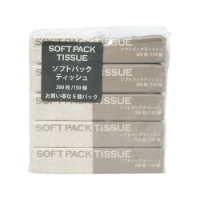 Bamboo Pulp Double-Layer Facial Tissue, 150 Sheets × 5 PacksBamboo pulp and a double-layer build support soft, absorbent wiping; the 150-sheet, five-pack format suits home or office use.View Product →
Sugarcane bagasse
Bagasse is the pith left after sugar extraction, and it is short-fibered, open and highly absorbent. That makes it a natural fit for kitchen roll and hand towel, where wicking speed matters more than tensile. Color runs to a natural off-white, so unbleached grades read as deliberately natural rather than dirty.
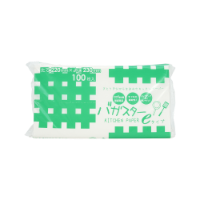 Oil-Absorbent Sugarcane Pulp Kitchen PaperSugarcane pulp kitchen paper is positioned for absorbing grease, handling ingredients, and wiping wet kitchen messes; multiple sizes and customization are offered.View Product →
Eucalyptus
Eucalyptus is a hardwood, so its fibers are short and uniform. Those fibers build bulk and a smooth surface, which is why most premium bath tissue blends lead with eucalyptus and add a small share of long-fiber pulp to hold strength.
Recycled fiber
Recovered paper is the most mature renewable stream in the category. Fiber length shortens with every pass, so after 5 to 7 cycles the pulp suits hand towel and toilet roll better than facial tissue. Deinking and contaminant removal drive the cost, not the raw material itself.
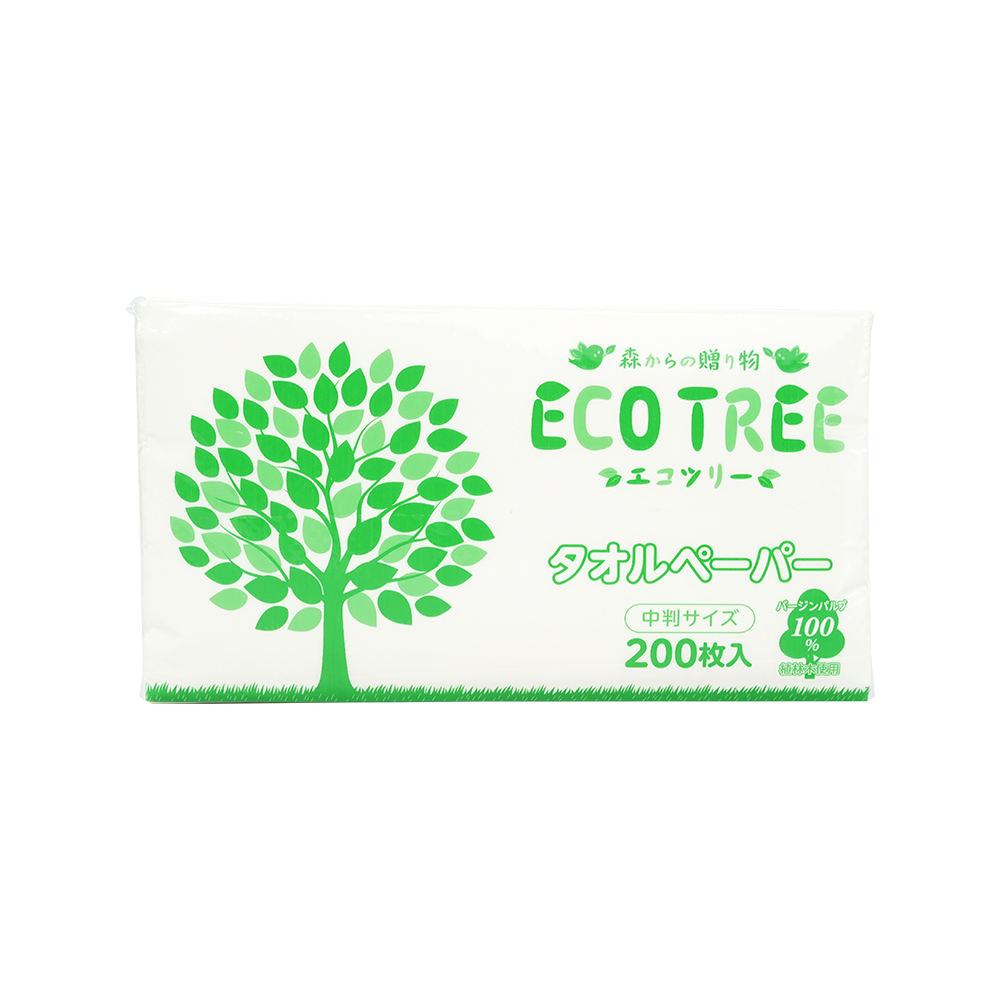
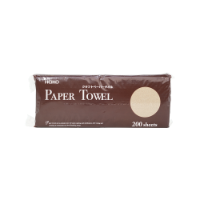 Recycled Natural-Color Hand Towels, OEM/ODMRecycled paper hand towels keep a natural color without deinking or bleaching; good absorbency and customizable weights, pump counts, and packaging suit commercial settings.View Product →
Hemp and wheat straw
Both offer long, strong fiber on a fast annual cycle. Neither scales easily in tissue: hemp supply is fragmented, and straw carries silica that shortens equipment life and complicates chemical recovery.
Bagasse never has to be grown for fiber at all. It is already sitting at the sugar mill, which keeps its supply chain short and ties its price to sugar production rather than timber markets.
Performance Comparison Across Renewable Fibers
No single renewable fiber leads on every metric: bagasse wins on absorbency, bamboo on tensile strength, eucalyptus on softness, and recycled pulp on cost consistency.
| Fiber | Absorbency | Softness | Wet strength | Cost consistency | Supply risk |
| Bamboo | Medium | Medium to high | High | Medium | Medium |
| Bagasse | High | Medium | Medium | High | Low to medium |
| Eucalyptus | Medium | High | Low to medium | High | Low |
| Recycled | Medium | Medium | Medium | High | Low |
| Hemp | Medium | Low | Very high | Low | High |
| Wheat straw | Medium | Low | High | Low | Medium |
Blend, do not substitute. A 70/30 bagasse and long-fiber blend usually beats either fiber used alone in a kitchen roll.
Claims That Hold Up and Claims That Do Not
A fiber claim is only as strong as the documentation behind it, and auditors increasingly ask for blend ratios rather than headline words.
Usually defensible
- Recycled content stated as a percentage, with a deinking record attached
- Bagasse described as an agricultural residue rather than a new crop
- Bamboo fiber with species and harvest region named
- Biodegradability backed by a test standard printed on the pack
Often fragile
- Tree-free used on a sheet that still carries wood pulp in the core
- Plastic-free claimed on a pack with a coated film window
- Carbon neutral with no stated boundary or offset register
- Compostable with no time or temperature condition given
Ask for the pulp bill of materials, not the brochure. If a supplier cannot give fiber type by percentage and origin by country, the claim will not survive a customer audit.
A Sourcing Checklist for Buyers
Six checks cover most of the risk in a renewable fiber purchase, and they take under an hour with a competent supplier.
- Confirm the blend by percentage. Fiber type by share, not by adjective. A 60/40 bagasse and wood sheet behaves very differently from 100 percent bagasse.
- Request the four physical numbers. Basis weight, caliper, water absorption time and wet tensile strength predict dispenser performance far better than a softness claim.
- Match fiber to format. Short-fiber bagasse suits towel; long-fiber bamboo and hemp suit grades where tear resistance matters.
- Verify origin documents. Mill certificates, chain of custody records and, for recycled streams, the deinking route.
- Run a dispensing trial. Sheet pull, break point and refill time change with fiber, even when grammage stays identical.
- Lock the claim wording early. Legal review is slower than sampling, and pack artwork deadlines rarely move.
A sample that passes the lab sheet and fails in the washroom has usually failed on caliper, not on fiber. Test the sheet in the dispenser it will actually live in.
For a wider view of how fiber moves from pulping to converting, read this overview of pulp and paper fiber sources and tissue supply chains.
Cost and Supply Risk in Plain Numbers
Renewable fiber rarely loses on unit price alone. It loses when the supply base is too thin to cover a seasonal gap or a single mill outage.
3 to 5Years for a bamboo culm to reach harvest
5 to 7Use cycles before recycled fiber drops out of facial grade
120 kmRoad distance from the Nantong mill area to Shanghai port
Bagasse tracks sugar production, so availability tightens in years when mills crush less cane. Bamboo is concentrated in a few growing regions, which adds freight and lead-time risk for European and North American buyers. Recycled pulp is the most geographically flexible stream, but collection rates and deinking capacity set the ceiling. A practical sourcing plan keeps one primary fiber and one qualified alternate, so a failed crop does not become a failed shipment. Our sustainability approach follows the same logic: use renewable and recycled inputs where the supply chain can actually support them at volume.
Every fiber switch costs money before it saves money: new refining curves, new drainage settings and a fresh trial run on the converting line.
Frequently Asked Questions
Is bamboo pulp softer than wood pulp?
Not by default. Bamboo fiber is longer and stronger, so early bamboo sheets felt firmer than hardwood tissue. Modern blends pair refined bamboo with short hardwood fiber, which brings softness close to a eucalyptus sheet while keeping the higher wet strength.
Is bagasse renewable if it is a waste product?
Yes. Bagasse is the residue left after cane juice extraction, and the cane regrows every season. No additional land is planted for the fiber, which is why its supply chain is short and its land-use footprint stays low.
Which renewable fiber absorbs the most?
Bagasse generally leads on water absorption rate because its short, open fibers wick quickly. Recycled fiber performs close behind in towel grades, while bamboo absorbs more slowly but holds more liquid under pressure.
Can recycled fiber be described as renewable?
Recycled fiber is renewable in the practical sense that it keeps cellulose in circulation instead of demanding fresh harvest. It is not a growth cycle, though, so pack claims should say recycled content with a percentage rather than implying a plant origin.
The fiber that wins a tender is rarely the most elegant one on paper. It is the one whose supply, price and performance survive twelve months of production without renegotiation.

ADD:No. 38 Huipu Road, Baipu Town, Rugao City, Jiangsu Province
Contact us
-

Tel: +86-513-88579198 88572918
-

FAX: +86-513-88572818
-

Email: info@tojin.com.cn
Copyright © 2002 - 2024 Jiangsu MIOV Paper Co., Ltd. All Rights Reserved. Recycled Paper Towel Manufacturers

