

 English
 日本語
日本語 한국어
한국어Industry News
 Home / News / Industry News / Japanese Tissues Explained: Washi, Oshibori and Bulk Tissue Buying Guide
 Japanese Tissues Explained: Washi, Oshibori and Bulk Tissue Buying Guide
 2026.10.15
 Industry News
Content
- 1 What "Japanese Tissue" Actually Means
- 2 Traditional Washi: Fibers, Forms and How It Is Made
- 3 The Everyday Japanese Tissue: Oshibori, Glossy Wipes and Hand Towels
- 4 Sourcing Tissue for the Japanese Market: The Specs That Decide the Order
- 5 Cost, Sustainability and the Factory Side
- 6 Frequently Asked Questions About Japanese Tissues
A conservator in London and a restaurant owner in Osaka can both order "Japanese tissue" this week and will unbox two completely different products. The conservator receives a 12 gsm sheet of handmade kozo washi; the restaurant owner receives a 26 gsm recycled hand towel in a three-dimensional carton. Same search phrase, different supply chains, and that gap is where most buying mistakes begin.
One keyword, two markets: museum-grade washi sold by the sheet, and hygiene tissue shipped to Japan by the container load.
What "Japanese Tissue" Actually Means
Japanese tissue is a thin, strong paper made from long plant fibers, and in English the term now covers two separate product families: conservation-grade washi and the tissue manufactured for the Japanese hygiene market.
The definition worth keeping: Japanese tissue is a lightweight sheet, typically 12 to 45 gsm, formed from long-fibered pulp such as kozo, mitsumata, gampi, bamboo or sugarcane bagasse. The fibers stay long because the pulp is treated gently, and long fibers are what let a sheet survive folding, wetting and abrasion without splitting.
In conservation, framing and model-making, the phrase points to handmade washi, sold by the sheet and graded by fiber, weight and surface. The classic jobs are practical ones:
- mending tears in paper and book pages
- reinforcing book hinges and spines
- reattaching loose signatures during rebinding
- skinning model aircraft and traditional kites
- printmaking and conservation mounting
In the tissue trade, the same phrase means the paper sold into Japan: hand towels at the washbasin, kitchen paper beside the stove, facial tissue by the mirror. The buyer is a distributor, a hotel group or a restaurant chain, and the spec sheet is built around cost per case, dispenser fit and wet strength rather than fiber purity.
Traditional Washi: Fibers, Forms and How It Is Made
Traditional washi is made by hand from the inner bark of paper mulberry, mitsumata or gampi; the bark is steamed, stripped, boiled with soda ash, hand-beaten, then formed sheet by sheet on a moving screen.
The fiber you choose decides almost everything about the finished sheet, which is why the table below is the fastest way to compare the options on a supplier's list.
| Fiber source | Typical fiber length | Behavior in the sheet | Where it is used |
| Kozo (paper mulberry) | 6-10 mm | Highest wet strength, tolerates folding and stitching | Conservation repair, book hinges |
| Mitsumata | 2-4 mm | Fine, smooth surface with good ink hold | Letterpress, calligraphy papers |
| Gampi | 3-5 mm | Dense and slightly glossy, resists insects | Fine printing, mounting |
| Bamboo | 2-3 mm | Firm and quick-draining, softer than wood pulp | Facial tissue, kitchen paper |
| Sugarcane bagasse | 1-2 mm | Short but bulky, high absorbency per gram | Kitchen paper, hand towels |
| Recycled fiber | Mixed and shortened | Lowest cost per tonne, lower wet strength | Washroom hand towels, toilet paper |
The handmade route follows six stages, and each one changes the character of the final sheet far more than a machine line does:
- Cut one-year branches and steam them so the bark lifts away cleanly.
- Strip the outer bark and keep only the white inner layer.
- Boil the strips with soda ash to soften the fiber without cutting it short.
- Hand-beat the cooked bark, removing specks until the pulp is evenly separated.
- Add neri from tororo-aoi root so the pulp suspends evenly in the vat.
- Form the sheet with a moving screen, then press and dry it on wooden boards.
Fiber length is the most useful number in this category. Kozo at 6-10 mm produces a sheet that survives a crease; short recycled fiber at 1-2 mm is what makes a cheap hand towel fall apart in a wet hand.
The Everyday Japanese Tissue: Oshibori, Glossy Wipes and Hand Towels
At a Japanese table, "tissue" means three different objects: a damp oshibori towel, a glossy coated wipe for the mouth and small spills, and the paper hand towel at the washbasin.
The oshibori is the rolled damp towel served before a meal, usually cotton cloth in full-service restaurants and a disposable nonwoven in high-volume chains. The shiny sheet many visitors notice is a coated or heavily calendered tissue: the gloss comes from a surface coating and calender pressure, which produces a low-lint sheet that wipes a mouth or a small spill without shedding fiber. It is deliberately not a high-absorbency product, so it will not rescue a knocked-over glass of water.
The third product, the washroom hand towel, is where most commercial volume sits. It runs 22-26 gsm in two plies, is embossed to hold the plies together, and carries a wet strength treatment so it still works when hands are wet.
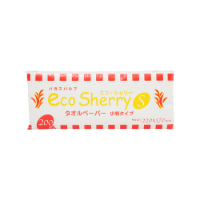 Strong Soft Sugarcane Pulp Hand TowelsSugarcane pulp hand towels for washroom volume, customizable in weight, size and packaging; basis weight, plies, embossing and wet strength can be confirmed before shipping.View Product →
22-45 gBasis weight range across hand towels, wipes and mother rolls
2 plyStandard construction for washroom hand towels in Japan
1,000,000+Cases a year shipped to Japan by one Jiangsu tissue exporter
Conservation washi
- Handmade, 12-30 gsm, sold by the sheet
- Kozo, mitsumata or gampi fiber
- Judged on fiber length and surface finish
- Strength matters more than cost per tonne
Japanese-market hygiene tissue
- Machine-made, 22-45 gsm, sold by the case
- Bamboo, bagasse, wood pulp or recycled fiber
- Judged on wet strength, embossing and dispenser fit
- Cost per case and freight fill rate decide the order
Sourcing Tissue for the Japanese Market: The Specs That Decide the Order
Japanese buyers normally confirm six specifications before a container ships: basis weight, ply and embossing, wet strength, coating, sheet dimensions and packaging format.
| Specification | Typical value for Japan | Why it decides the order |
| Basis weight | 22-26 gsm hand towels, 34-42 gsm wipes | Below 20 gsm the sheet collapses in a wet hand and the complaint rate climbs |
| Ply and embossing | 2 ply, point-to-point embossed | The bonding pattern sets bulk, absorbency and how the sheet pulls from the dispenser |
| Wet strength | Measurably higher wet tensile than a plain recycled sheet | A towel that shreds on a wet hand is rejected regardless of price |
| Coating or antibacterial finish | Coated, dry-touch film on wipes | Film life controls how long the active agent keeps working after the pack is opened |
| Sheet size | 200-230 mm sheets matched to the dispenser | A 5 mm mismatch jams a folded dispenser or doubles pull force |
| Packaging format | Capsule, pump, three-dimensional pack, roll pack | Format drives shelf appeal, carton cube and freight cost per case |
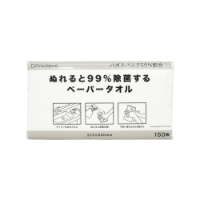 150-Pack Coated Antibacterial Hand TowelsA 150-sheet coated antibacterial hand towel pack for frequent wiping; 210X230mm format suits hygiene-focused settings, with packaging customization available.View Product →
22 g hand towel
26 g hand towel
34 g coated wipe
45 g mother roll
Relative basis weight by product type, drawn from common Japanese-market specifications.
Packaging formats and dispenser fit
A capsule pack of antibacterial wipes, a pump pack of facial tissue and a three-dimensional hand towel carton are not interchangeable from a logistics point of view. Capsule formats ship light and sell as travel items; pump packs carry more sheets per carton but need a stable shelf; three-dimensional packs protect embossed plies during container transport. Ask for the carton cube before you compare unit prices.
Supply risk to watch
Pulp and freight are the two variables that move landed cost fastest. Non-wood pulp prices track agricultural seasons, and sailings out of Shanghai Port, roughly 120 km from most Jiangsu tissue plants, swing in both rate and schedule during peak season. If your volume runs into full containers, work through a bulk hand paper towel supply checklist before you fix a basis weight.
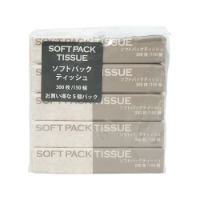 150 Pump/5-Pack Bamboo Pulp Double-Layer Facial TissueBamboo pulp facial tissue with a double-layer, 150-sheet/5-pack format; a non-wood fiber option relevant to cost and carbon comparisons for bulk buyers.View Product →
Cost, Sustainability and the Factory Side
Non-wood and recycled fiber is the biggest single lever on both cost and carbon in this category, and it is the reason Chinese suppliers now lead on Japanese-market tissue volume.
Sugarcane bagasse and bamboo pulp are agricultural by-products or fast-growing crops, so they avoid the forest-accounting questions attached to virgin wood pulp and usually land cheaper per tonne. Exporters such as Jiangsu MIOV Paper Industry, which runs an ISO 9001 quality system and ships more than one million cases a year to Japan from a plant about 120 km from Shanghai Port, build their entire range around those fibers, from recycled hand towels to bamboo facial tissue. The company publishes a sustainability statement that ties raw material choice to lower customer cost, which is a fair summary of how the economics actually work.
Fiber choice moves landed cost more than any other single decision. Switching a hand towel line from virgin wood pulp to sugarcane bagasse changes both the pulp bill and the wet strength target you have to test for, so re-sample before you re-quote.
Frequently Asked Questions About Japanese Tissues
Is Japanese tissue the same as rice paper?
No. Rice paper is a long-standing misnomer. Japanese tissue is made from kozo, mitsumata, gampi or, in machine-made hygiene grades, bamboo, bagasse and recycled fiber. No rice is involved at any stage.
Why is the tissue at Japanese restaurants glossy?
It is coated or heavily calendered. The treatment seals the surface, which cuts lint and makes the sheet feel smooth for a quick mouth wipe. The trade-off is lower absorbency, so it is not the right product for cleaning up a full spill.
What basis weight should I order for washroom hand towels?
22-26 gsm in two plies covers most Japanese washroom dispensers. Below 20 gsm the sheet tears on a wet hand, and above 30 gsm you pay for fiber you do not need unless the towel is meant for kitchen or industrial use.
How do I check that a supplier can serve the Japanese market?
Ask for ISO 9001 evidence, production samples from the actual line rather than a lab sheet, basis weight and wet strength test reports, packaging compatibility with the dispenser you already use, and references from comparable volume customers. A factory already shipping a million cases a year into Japan has been audited on all of these.
Spec sheets narrow the field, but a sample pack decides it. Order hand towels, kitchen paper and facial tissue in a single shipment, then test them against your own dispenser, your own water and your own staff before you commit to a container.

ADD:No. 38 Huipu Road, Baipu Town, Rugao City, Jiangsu Province
Contact us
-

Tel: +86-513-88579198 88572918
-

FAX: +86-513-88572818
-

Email: info@tojin.com.cn

Copyright © 2002 - 2024 Jiangsu MIOV Paper Industry Co., Ltd. All Rights Reserved. Recycled Paper Towel Manufacturers

