

 English
 日本語
日本語 한국어
한국어Industry News
 Home / News / Industry News / Human Health Benefits of Replacing Single-Use Plastic with Paper: What Really Changes
 Human Health Benefits of Replacing Single-Use Plastic with Paper: What Really Changes
 2026.10.09
 Industry News
Content
Hot soup in a foam cup. A knife coming down on a plastic cutting board. A takeout container going into the microwave. Each of these scenes repeats dozens of times a day, and each one is a chance for plastic additives to reach the body. Paper versions of the same items change that exposure without asking anyone to change their habits.
Removing plastic entirely is neither possible nor necessary. What is useful is knowing which plastic contacts actually matter, and then replacing those specifically. Single-use paper products happen to cover most of them: cups, food container liners, hand towels, kitchen rolls and takeaway wrap.
What follows is about health outcomes, not environmental slogans: which exposure routes really move, what paper fibre changes and what it does not, and what a buyer should actually check on a specification sheet.
Three exposure routes, and how paper cuts them
The human health benefits of replacing single-use plastic with paper come mainly from cutting three routes by which plastic additives reach the body: ingestion, inhalation and skin contact. Plastic packaging is not an inert material. Phthalate plasticisers, bisphenol compounds, stabilisers and colourants migrate out of the polymer structure over time and under use, and heat, fat and acid all speed the process up considerably.
Paper fibre does not contain those additives, so there is nothing to migrate. The effect is strongest on items that sit in direct contact with food, drink and skin.
3 Main routes for plastic additives to enter the body: ingestion, inhalation, skin contact
2 Additive families under the closest scrutiny in flexible plastics: phthalates and bisphenols
0 Plasticisers deliberately added to paper fibre
The three routes do not carry equal weight:
- Ingestion. The most significant route. Hot, fatty and acidic foods pull additives out of plastic containers most efficiently, and takeaway boxes, microwave trays and drink cups combine all three conditions at once.
- Inhalation. The second route. Microplastic particles and additive vapours shed from worn plastic items into indoor air, and the effect is stronger in poorly ventilated spaces where plastic items accumulate.
- Skin contact. The smallest route by volume, but not negligible where an item is worn against the body or handled for long periods.
Single-use paper products are hygiene and food-contact items made primarily from pulp fibre and designed to be used once, including hand towels, kitchen rolls, napkins, facial tissue and paper cups. They may carry a water-based coating, but they contain no plasticiser.
Put the three routes together and the substitution value becomes fairly easy to judge. The exposure that matters is concentrated in food service and washrooms, not spread evenly across every plastic object in a building.
Additive migration and what fibre choice changes
Paper matters not because it is natural but because pulp fibre carries no deliberately added plasticiser, and that is the most fundamental difference between it and most flexible plastics. Phthalates and bisphenols are not contamination from the production process. They are ingredients added on purpose to make a rigid polymer soft, clear or heat resistant. Precisely because they are not chemically bonded into the polymer chain, they keep leaching out.
Single-use plastic
- Contains plasticisers, stabilisers and colourants
- Heat, fat and acid accelerate migration
- Reused containers shed microplastics once worn
- Surface scratches hold onto food residue and microbes
Single-use paper
- No plasticisers in the formulation
- Fibre absorbs water and oil without additives
- Used once, so no cross-contamination from reuse
- Available in bamboo, sugarcane or recycled pulp
Paper is not a blank cheque, though. Greaseproof and moisture-resistant papers are usually coated, and fluorinated compounds and polyethylene attract the most attention. A fluorinated coating is designed specifically to resist oil and water, which is exactly what makes it persistent. For direct food contact, uncoated or water-based coated paper is the safer choice. Plain dry-use tissue normally needs no coating at all.
Choosing paper is not the decision. Choosing the fibre and the coating is the decision. Bamboo and sugarcane pulp have long fibres that hold wet strength well, which is why they suit kitchen rolls and hand towels, while recycled pulp fits dry wiping tasks.
The washroom is the weakest link in infection control
In offices, restaurants and shopping centres, the washroom is the weakest link in the infection-control chain, and single-use hand towels are the cheapest way to reinforce it. How hands are dried has a large effect on microbial transfer. Wet hands transfer bacteria far more efficiently than dry ones, so drying is the last step of hand hygiene and the one most often skipped.
Electric dryers do not solve this well. Hand hygiene studies repeatedly find that paper towels remove more residual microorganisms than dryers and complete the job faster, which matters at peak hours when few people are willing to wait. Shared cloth rolls leave the previous user's hand flora on the next towel. A single-use hand towel sidesteps both problems: it is never reused, and it requires no waiting.
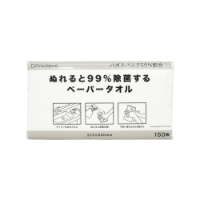 150-Pack Coated Antibacterial Hand Towels, 210 x 230 mmSingle-use treated hand towels in a 150-sheet pack, suited to washrooms, homes, and offices where frequent hygienic hand wiping is needed.View Product →
For a washroom specification, only a handful of parameters separate a towel that works from one that fails in service:
- Gram weight. Commercial hand towels commonly sit between 22 and 34 grams per square metre; heavier sheets hold wet strength better in a single hand.
- Absorbency speed. Measured in seconds to full saturation, this determines whether hands are actually dry after two passes.
- Wet strength. Decides whether the sheet breaks apart or sheds lint during drying.
- Coating and antibacterial treatment. Antibacterial coatings suit high-traffic sites with tighter hygiene requirements, but the coating should be confirmed as a water-based system.
- Dispensing format. Interfolded, roll and capsule formats differ noticeably in sheets per pull and jam rate.
Kitchen paper and the second front in food preparation
The kitchen is the second place where single-use paper earns its keep: it lifts excess oil and moisture away and carries it straight off the work surface instead of leaving it behind the way cloths and sponges do.
Knife marks on a plastic cutting board form narrow grooves that ordinary washing never reaches, and bacteria survive there until the next round of chopping returns them to the food. Sponges are worse: damp, porous and full of organic matter, they are an ideal environment for microbial growth. Kitchen paper covers both gaps. It is used once, thrown away immediately, and contains no plasticiser.
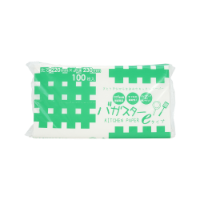 Strong Oil-Absorbent Sugarcane Pulp Kitchen PaperRenewable sugarcane-pulp kitchen paper for absorbing cooking grease, handling ingredients, and wiping kitchen surfaces or wet spills with single-use convenience.View Product →
Grease management is the other underrated step. Blotting fried food with kitchen paper after cooking removes surface oil directly and reduces the fat content of the meal itself. That is difficult to do against a plastic surface, which deforms under heat and is not suitable for direct contact with hot food.
When selecting kitchen paper, absorbency speed and wet strength matter more than gram weight alone. The logic behind how fibre choice drives oil pickup and wet strength is broken down in more detail in this material and buying guide.
material and buying guideNote also that a single-use paper towel is not automatically safe for every kitchen task. Very hot oil straight from a pan, and paper left sitting on a hot hob, are both fire risks regardless of material.
The four parameters buyers should actually verify
When sourcing single-use paper products, only four parameters genuinely differentiate one supply from another: fibre source, gram weight, coating method and packaging format. Everything else on a specification sheet is largely marketing language.
| Parameter | Why it matters | What to check |
| Fibre source | Sets softness, absorbency and wet strength | Bamboo and sugarcane pulp suit kitchen paper and hand towels; recycled pulp fits dry wiping |
| Gram weight | Determines how much liquid one sheet can hold | Commercial hand towels commonly run 22 to 34 gsm; kitchen rolls often sit near 45 gsm |
| Coating method | Controls grease and moisture resistance, and the associated chemical risk | Prefer uncoated or water-based coatings for food contact; avoid fluorinated coatings |
| Packaging format | Affects dispensing, sheets per pull and storage efficiency | Interfolded, roll and capsule formats serve different venues and traffic levels |
Sustainability deserves a separate look, because it is where paper and plastic claims diverge most sharply. Product lines built on non-wood and recycled pulp reduce pressure on forest harvest and cut emissions from the pulping stage, which is consistent with the raw-material strategy of a manufacturer working mainly from bamboo, sugarcane and recovered fibre. The full sustainability overview sets out how those claims are framed.
sustainability overview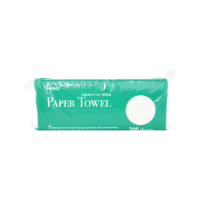 Biodegradable Sugarcane Pulp Hand TowelsBiodegradable sugarcane-pulp hand towels for public washrooms, schools, and hospitals, with customizable weight, draw count, and packaging.View Product →
Frequently asked questions
Do paper substitutes always improve health outcomes?
No. The benefits are clearest where paper touches food, drink or skin directly, such as hand towels, kitchen rolls, container liners and cups. Where a plastic item never contacts food or skin, for example a bin liner or a stretch film, swapping to paper changes very little in health terms.
Can paper really resist both oil and water?
Plain fibre absorbs water but needs a coating to hold back oil and prolonged moisture. Uncoated paper suits dry wiping and short contact. Where grease resistance is required, water-based coated paper is the safer option. Fluorinated coatings block oil most effectively, but they are also the type most worth avoiding in food-contact use.
Are paper products much more expensive than plastic ones?
The unit price is usually higher, but the two are not costed the same way. Reusable plastic needs washing or dedicated consumables, while paper is used once and discarded, saving water, detergent and labour. In bulk, the gap comes down to gram weight and coating rather than to the word paper.
Are single-use paper towels more hygienic than dryers?
On both removal of residual microorganisms and drying speed, paper generally wins. A dryer's advantage is that it consumes no consumable. For busy sites with tighter hygiene standards, paper is the safer default. The real gap is rarely the equipment itself but whether people finish drying their hands at all.

ADD:No. 38 Huipu Road, Baipu Town, Rugao City, Jiangsu Province
Contact us
-

Tel: +86-513-88579198 88572918
-

FAX: +86-513-88572818
-

Email: info@tojin.com.cn

Copyright © 2002 - 2024 Jiangsu MIOV Paper Industry Co., Ltd. All Rights Reserved. Recycled Paper Towel Manufacturers

