

 English
 日本語
 한국어
Industry News
 Home / News / Industry News / Pulp and Paper Applications in Tissue: Fiber, Converting and Buying Guide
Pulp and Paper Applications in Tissue: Fiber, Converting and Buying Guide
 2026.11.25
 Industry News
Content
- 1 Pulp and Paper Applications: The Three Layers That Decide Everything
- 2 Fiber Grades and What Each One Changes on the Line
- 3 Converting Grades and Finished Goods Are Two Different Businesses
- 4 The Specification Sheet That Survives a Factory Audit
- 5 Away-From-Home and Household Buying Are Not the Same Problem
- 6 Sourcing, Lead Time and the Export Route to Japan
- 7 Common Questions About Pulp and Paper Applications
Two buyers can order from the same tissue plant and never touch the same product. One runs a sushi chain in Osaka and needs a folded hand towel that still works from a half-empty dispenser; the other converts 45 g mother rolls into retail packs. Both sit on the same pulp and paper applications map, yet the specification sheet each of them signs looks nothing alike.
Export reality More than 1,000,000 cartons of tissue leave the Jiangsu plant for Japan each year, and every carton is settled by three decisions: fiber, grammage and format.
Pulp and Paper Applications: The Three Layers That Decide Everything
Tissue work splits into fiber selection, converting and finished format, and a problem at any one of those layers shows up at the sink.
Most sourcing mistakes happen when a buyer negotiates at one layer while the real cost sits at another. A cheaper fiber can raise converting losses by a few percent. A heavier sheet can fix a dispenser jam that was never about strength in the first place.
- Fiber selection sets absorbency, wet strength, natural shade and cost per tonne before a sheet exists.
- Converting decides ply, embossing, coating, perforation and the wrap that keeps a roll round in transit.
- Finished format decides whether the product fits the dispenser, the retail shelf or the freight carton.
Definition: a converting grade is an unbranded jumbo or mother roll sold by weight to another manufacturer. A finished good is a packed, labelled unit sold by carton or pallet.
Fiber Grades and What Each One Changes on the Line
Fiber choice sets the ceiling on absorbency, softness and price before a single sheet is formed.
The grades most buyers compare today are bagasse, bamboo, virgin wood, recycled and eucalyptus blends. They are not interchangeable, and swapping one for another without re-testing your line is how a stable product quietly turns inconsistent.
| Fiber grade | Typical fit | Wet strength | Absorbency | Cost per tonne |
| Sugarcane bagasse | Kitchen rolls, folded hand towels | Medium | High | Low to mid |
| Bamboo pulp | Facial tissue, hand towels | Medium to high | Medium to high | Mid |
| Virgin wood pulp | Premium facial and bathroom tissue | High | High | High |
| Recycled pulp | Toilet paper, natural-color towels | Medium | Medium | Lowest |
| Eucalyptus blend | Soft facial tissue | Medium | High | Mid to high |
Bagasse and bamboo are agricultural by-products, so their price moves with the sugar and bamboo harvest rather than with pulp futures. That is an advantage in most years and a planning risk in a bad one. The reasoning behind non-wood and recycled fiber at MIOV, including the carbon argument, is set out on the sustainability page.
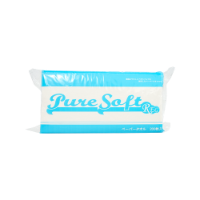 Biodegradable Sugarcane Pulp Hand TowelsSugarcane-fiber hand towels with customizable weight, draw count and packaging; suitable where absorbency and strength matter for public washroom cleaning.View Product →
Converting Grades and Finished Goods Are Two Different Businesses
A converting buyer negotiates on weight, tensile and roll diameter; a finished-goods buyer negotiates on sheet count, pack format and carton compression.
Treating those two conversations as one is the fastest way to overpay. Converting economics are driven by tonnes, yield and machine uptime. Finished-goods economics are driven by pulls per pack, print quality and how many units fit on a pallet.
Converting buyer
- Mother roll bought by kilogram, not by unit
- Tensile and wet strength checked at the unwind
- Roll diameter and core size matched to the rewinder
- Moisture content controlled at loading
Finished-goods buyer
- Pulls or sheets per pack, printed on pack
- Dispenser compatibility before the first order
- Print registration and film seal integrity
- Carton compression strength for sea freight
Rule of thumb: if your product will be rewound, cut or re-packed by someone else, you are buying a converting grade and should be quoting in tonnes.
 45g Kitchen Paper Towel Roll, Two-PackTwo 45g kitchen rolls offering absorbency and durability for wiping grease, moisture and spills; weights, sizes and packaging can be customized.View Product →
The Specification Sheet That Survives a Factory Audit
A tissue specification only holds up in an audit when it states ranges, test methods and sample size rather than single target numbers.
Write the parameter, the tolerance band and the method. A sheet that says 26 g without saying 25 to 27 g, tested on a defined sample, gives a quality team nothing to defend and gives a supplier nothing to miss.
| Parameter | Working range | Why it matters |
| Grammage | 22 to 45 gsm | Sets absorbency and cost per sheet |
| Ply | 2 to 3 | Balances softness against layer separation |
| Sheet count | 120 to 200 pulls | Drives perceived value on shelf |
| Wet strength | Medium to high | Controls break-up in water versus in use |
| Pack format | Capsule, pump, poly, carton | Must match dispenser and freight plan |
22-45 gsm range across regular towel grades
2-3 ply options for towel and facial tissue
120-200 typical pulls per retail pack
Write tolerances, not targets. A supplier who has agreed a band of plus or minus one gram will hit it; a supplier who has agreed a single number will average it and argue about the results.
Away-From-Home and Household Buying Are Not the Same Problem
Away-from-home buyers pay for dispensing reliability and staff time; household buyers pay for shelf appeal and price per pack.
The same 150-sheet hand towel is a hygiene consumable in a restaurant and a near-impulse purchase in a supermarket. That changes the test protocol, the packaging and even the fiber that makes commercial sense.
Food service
Fast restock, wet hands, high turnover. Dispenser fit and cost per use beat softness every time.
Retail household
Package print, pack count and shelf presence carry more weight than tensile strength.
Converting and OEM
Machine runnability, roll consistency and moisture control decide whether the line stops.
Dispenser fit is the most common failure in a first away-from-home order. Confirm the exact dispenser model, the pack dimensions and the pull-out resistance before confirming the print run, not after.
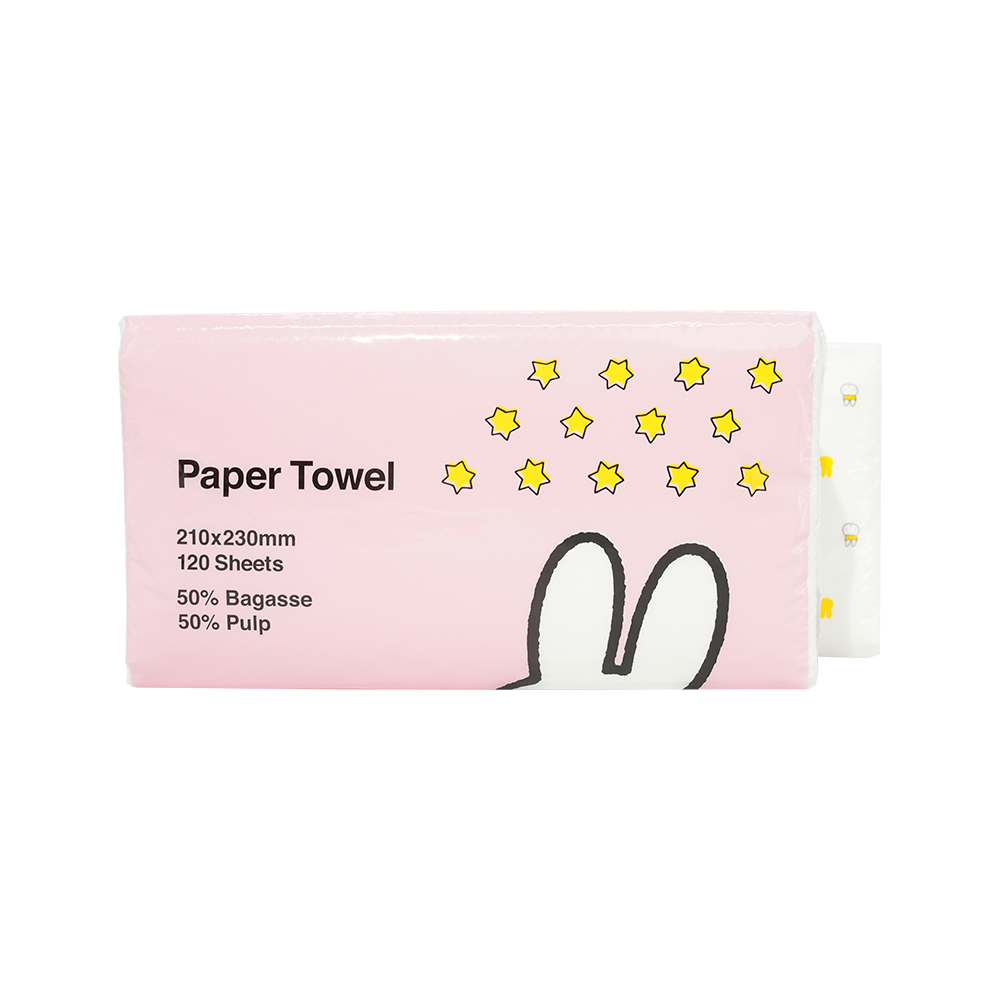 Oil-Absorbent Sugarcane Pulp Kitchen PaperSugarcane-pulp kitchen paper for grease absorption and wet cleaning, available in multiple sheet sizes with customized weight, size and packaging.View Product →
Sourcing, Lead Time and the Export Route to Japan
Lead time in export tissue is set by fiber procurement and port scheduling as much as by machine speed.
A well-managed order moves through four checkpoints, and delays are usually visible one checkpoint earlier than the buyer expects.
- Brief and format matching. Confirm grammage, ply and pack format against the dispenser or the shelf before quoting.
- Sample and line trial. Test absorbency, wet strength and runnability on your own equipment, not on a lab sheet alone.
- Pre-production and inspection. Agree tolerances, the sampling plan and carton compression; ISO 9001 records travel with the order.
- Port and shipment. The Jiangsu plant sits about 120 km from Shanghai Port, roughly a day by truck once the container is released.
MIOV has run this route since 2007 and ships more than one million cartons to Japan annually; the line layout, equipment and inspection points are documented on the factory page.
A buyer who checks a sample, a tolerance band and a container plan before the first order usually skips the second audit entirely.
Common Questions About Pulp and Paper Applications
What does pulp and paper applications mean in tissue buying?
It describes where the fiber actually ends up: a converting roll, an away-from-home dispenser, a retail shelf or a private-label pack. Each application carries its own specification and testing priorities.
Is bagasse better than bamboo for hand towels?
Bagasse usually wins on absorbency and price, while bamboo offers a better softness balance. Neither is universally better, so match the fiber to the dispenser, the drying expectation and the cost target.
Why does grammage matter more than sheet count?
Sheet count is visible on the pack, but grammage determines how much fiber a buyer actually pays for. A 200-sheet pack at low grammage can cost less to make and more per use than a 150-sheet pack at a heavier grade.
What is the difference between a mother roll and a jumbo roll?
Both are converting grades sold by weight. The naming usually reflects diameter and core size, and the important detail is whether the roll fits your rewinder without re-shafting.
Pick the fiber for the job, the tolerance band for the audit, and the pack format for the dispenser. Everything else in a tissue quote follows from those three choices.


ADD:No. 38 Huipu Road, Baipu Town, Rugao City, Jiangsu Province
Contact us
-

Tel: +86-513-88579198 88572918
-

FAX: +86-513-88572818
-

Email: info@tojin.com.cn

Copyright © 2002 - 2024 Jiangsu MIOV Paper Co., Ltd. All Rights Reserved. Recycled Paper Towel Manufacturers

