

 English
 日本語
 한국어
Industry News
 Home / News / Industry News / Paper Dryer Moisture Sensor Specs: Valmet, Voith, Kadant and TAPPI Benchmarks
Paper Dryer Moisture Sensor Specs: Valmet, Voith, Kadant and TAPPI Benchmarks
 2026.11.19
 Industry News
Content
- 1 What a dryer-section moisture sensor actually measures
- 2 Specifications to lock in before the purchase order
- 3 Where Valmet, Voith and Kadant sit in the chain
- 4 Which TAPPI standards anchor the numbers
- 5 A calibration sequence that survives an audit
- 6 Why reel moisture matters after the reel leaves the mill
- 7 Questions buyers ask about moisture specifications
Dryer section specification guide
A tissue reel that leaves the Yankee hood at 5.5 percent moisture instead of 4.8 percent still passes a visual check, still runs through the converting line, and still ships. Six weeks later, inside a container bound for Kobe, that extra 0.7 percent is the difference between a firm roll with clean edges and a load of flattened logs with a moisture claim attached.
Dryer-section moisture sensors exist to catch that drift while it is still a number on a screen and not a debit note. The trouble is that a sensor data sheet and a mill specification are two different documents, and the standard used to verify the sensor is usually chosen after the purchase order is signed. What follows is what to write down before that happens.
What a dryer-section moisture sensor actually measures
A dryer-section moisture sensor measures the water still held in the formed sheet at one fixed point between the last dryer can and the reel, and reports it as a percentage of total sheet weight.
That definition matters because three other moisture numbers get confused with it: stock consistency in the approach flow, humidity inside the hood, and the moisture of the finished roll measured in the lab two days later. A gauge that is excellent at one of those jobs will fail at the others, and a specification that never names the measurement point will receive whichever sensor the vendor had in stock.
Reel moisture is the water content of the dried sheet at the reel, expressed as a percentage of total weight, measured on a sample conditioned to TAPPI T 402 conditions and dried to constant mass by the TAPPI T 412 oven method.
The physics splits into two families, and nearly every purchase decision starts there.
Infrared reflectance
An emitter reads water absorption near 1.45 and 1.94 microns against a reference wavelength. Fast, small spot, strong at the low moisture typical of tissue, but the reading shifts with furnish, ash and sheet colour, so each grade needs its own calibration table.
Microwave transmission
A transmitter and receiver measure total water mass through the full sheet thickness. Less sensitive to surface effects and filler, but it needs basis weight compensation and a heavier installation, which is why it shows up mostly on board and heavy grades.
On a tissue machine, infrared is the working default. The four factors that move the number most on a light sheet are:
- Furnish: recycled fibre and mixed pulp supply chains carry more ash, and ash reads as dry.
- Caliper and crepe: a creped sheet scatters light differently from a flat one, so a grade change without a calibration change walks the offset.
- Sheet temperature: a hot sheet off the last can shifts the absorption baseline by a few tenths of a point.
- Head contamination: dust and lint on the window build up quietly and read as wetter than the sheet really is.
Specifications to lock in before the purchase order
A usable moisture sensor specification states range, repeatability, spot size, standoff, response time, calibration basis and environmental protection as separate, numbered requirements.
0-30% Water range, with accuracy stated inside 2-12 percent
0.10% Absolute repeatability target on tissue grades
1 s Response to 95 percent of a step change
| Parameter | Entry to write into the spec | Why it matters on a tissue line |
| Measurement range | 0 to 30 percent water, with a declared accuracy band from 2 to 12 percent | Reel moisture on tissue sits between 4 and 8 percent; accuracy quoted outside that band is marketing, not control |
| Repeatability and accuracy | Repeatability 0.10 percent absolute, accuracy 0.25 percent against oven samples | Control loops chase repeatability, audits chase accuracy, and the two numbers are not interchangeable |
| Spot size | 10 to 25 mm measurement diameter | Too wide a spot blends cross-direction streaks and the profile looks flatter than reality |
| Head gap | 8 to 15 mm standoff with automatic sheet-break retraction | Tissue breaks often; a head that cannot retract turns into a doctor blade |
| Response time | 1 second or less to 95 percent of a step change | Faster than the scanner cycle keeps the reading from being stale before it reaches the control loop |
| Calibration basis | TAPPI T 412 oven method, minimum ten samples across the working range | Gives the gauge a traceable reference and leaves an audit trail the QA file can hold |
| Environment | IP65 housing, purged optics, ambient up to 60 C at the frame | The hood side is hot, humid and dusty, and unsealed optics fail in months, not years |
Two of those rows decide whether the sensor is useful. Repeatability decides whether the automatic control can act on the signal at all, because a gauge that repeats to 0.05 percent allows a tighter dead band than one that repeats to 0.4 percent. Calibration basis decides whether the number survives an argument with a customer, since the only moisture that counts in a claim is the one produced by the oven method on a sample that was handled properly.
Where Valmet, Voith and Kadant sit in the chain
Valmet and Voith supply the moisture sensor as one module inside an integrated quality control system, while Kadant supplies the dryer-section hardware that determines how fast the sensor reading can actually be corrected.
Valmet
Moisture measurement runs inside the Valmet IQ scanner and feeds machine-direction and cross-direction controls. On a Valmet-built tissue line, sensor, scanner and automation arrive as one delivery, which shortens commissioning but ties the calibration workflow to a single vendor interface.
Voith
Quality management sensors are paired with profiling actuators and hood control, so moisture trends sit in the same screen as hood supply, exhaust and steam valves. Buyers usually inherit the vendor of the machine rather than choosing freely.
Kadant
The contribution is mostly dryer section: steam joints, syphons, thermocompressors and hood equipment. The gauge itself is often third party, but if condensate is not evacuated cleanly the sheet responds slowly and a good sensor looks like a bad one.
The practical consequence is that the sensor and the response path should be specified separately. A one-second gauge bolted to a dryer section with twelve minutes of thermal lag gives a control loop that is accurate on paper and sluggish in practice. Our own mill technology and converting lines face the same trade-off whenever a new grade is introduced mid-season.
Which TAPPI standards anchor the numbers
TAPPI T 412 is the referee method for moisture in paper, and TAPPI T 402 fixes the conditioning atmosphere at 23 C plus or minus 1 degree and 50 percent relative humidity plus or minus 2 points.
No TAPPI standard specifies the accuracy of an online moisture gauge. The standards define how the reference sample is handled, and the mill defines how the gauge is compared against it. That gap is where most calibration disputes are born.
- TAPPI T 412 covers moisture in pulp, paper and paperboard by oven drying at 105 C to constant mass. Every online reading is ultimately judged against this number.
- TAPPI T 402 sets the standard conditioning atmosphere. A sample that skips conditioning reads low by several tenths of a point.
- TAPPI T 550 covers equilibrium moisture for chemical analysis. It appears in specifications now and then and is rarely relevant to reel moisture control.
- TAPPI TIP 0404 series offers dryer-section and steam system practice guidance, which is the useful reference when writing the response-path half of a specification.
One operational detail earns its keep: pull calibration samples from the reel, bag them immediately, and never let them sit on a warm scanner frame. Twenty minutes on a hot frame reads 0.3 to 0.5 points low and quietly shifts the whole calibration.
A calibration sequence that survives an audit
A defensible calibration uses at least ten samples spread across the working range, conditioned to TAPPI T 402, dried under TAPPI T 412, and plotted against the gauge reading with the residual error recorded rather than only the average.
- Stabilise the grade. Run at least thirty minutes at steady speed, stock and steam pressure before the first sample is taken, otherwise the first three points describe a transient rather than a grade.
- Collect across the range. Ten reels or ten positions spanning roughly 2 to 10 percent moisture, with the gauge reading logged at the moment of sampling.
- Condition, then dry. T 402 atmosphere first, T 412 oven second, and record both the wet and dry masses in the same file as the gauge reading.
- Fit and keep the residuals. A least squares fit gives slope and offset; the maximum residual tells you whether the gauge is usable at the edges of the range or only in the middle.
- Recheck quarterly and after any head service. A window cleaning or a lamp replacement is a calibration event, not maintenance.
Why reel moisture matters after the reel leaves the mill
Reel moisture decides roll hardness, crepe retention and the risk of condensation inside a shipping container, which is why buyers of exported tissue should ask for a moisture tolerance and not only a grammage.
Facial tissue, two-ply 4.5-5.5%
Kitchen towel, sugarcane pulp 5.0-7.0%
Bath tissue, recycled furnish 5.5-7.0%
Mother roll for converting 5.0-6.5%
Bar length indicates the upper end of the typical commercial band for each grade. For a mill exporting to Japan, the container is the real test. A forty-foot box moving from Nantong to Yokohama in winter can drop 25 degrees between loading and arrival, and a reel shipped at 7.5 percent releases that moisture onto the wrapper while the outer plies pick up the difference and block.
 45g Two-Roll Kitchen Paper Towel PackTwo 45g kitchen paper towel rolls for grease, moisture and general cleaning, with customizable weights, sizes and packaging for OEM/ODM supply.View Product →
Mother rolls are the most exposed grade in that scenario, because a converter will not see the soft edges until the roll is on the unwinder. Finished hand towels carry the same risk at lower mass: a carton that has absorbed two points of moisture feels the same on the pallet and behaves very differently at the dispenser.
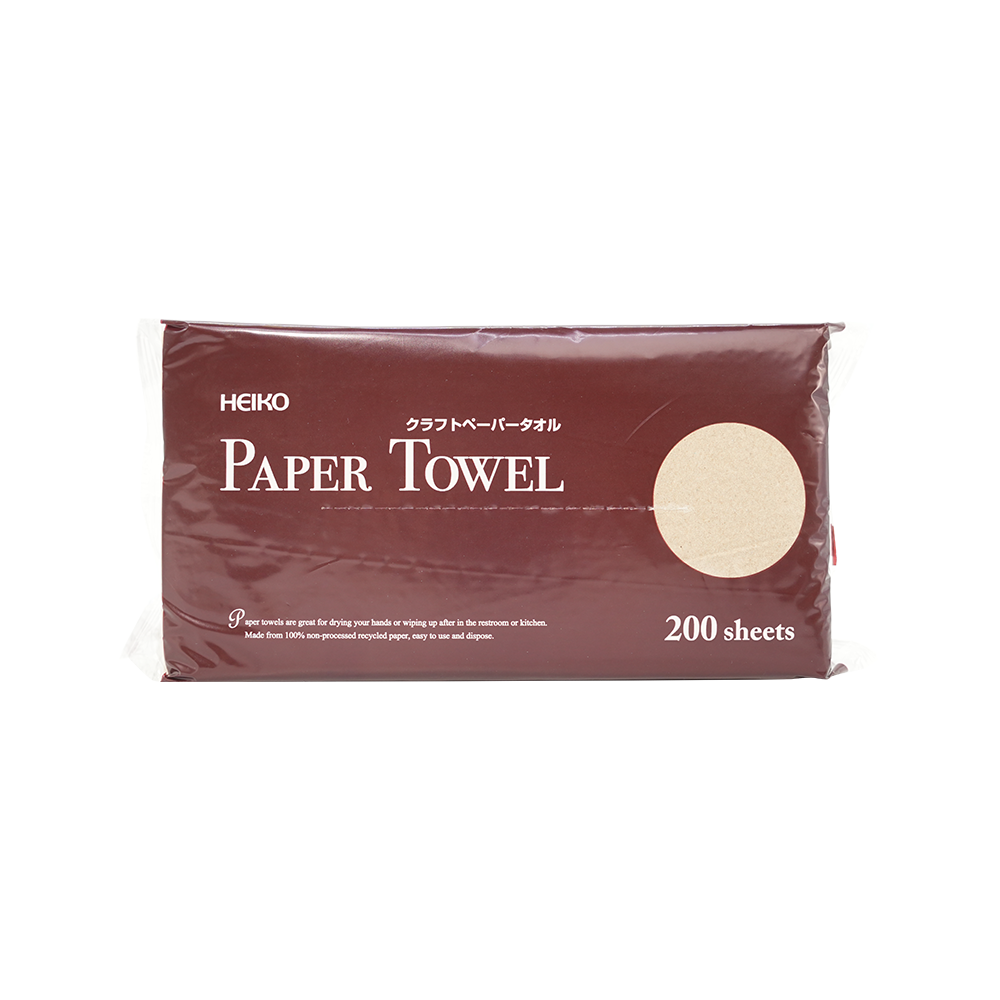
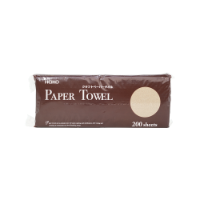 Recycled Natural Color Hand TowelsRecycled-paper hand towels retain natural color and offer good absorbency, with two sizes and customizable weights, pack counts and packaging.View Product →
Questions buyers ask about moisture specifications
What accuracy should I ask for in a moisture sensor specification?
Ask for 0.25 percent absolute against oven-dried samples and 0.10 percent absolute repeatability. Anything tighter than 0.25 percent on a tissue grade is hard to defend once sampling error from the reel is included.
Is a microwave sensor better than infrared for tissue?
Usually not. Microwave handles high moisture and variable ash better, but tissue runs low and thin, where infrared gives a smaller spot and a faster response for less money. Microwave earns its place on board and on grades with heavy filler loading.
Do Valmet, Voith and Kadant sensors certify to TAPPI standards?
No. Vendors calibrate against mill samples that are tested per TAPPI T 412, but the standard itself covers the laboratory method, not the instrument. The calibration procedure has to be written by the mill and kept with the quality records.
How often should an online moisture gauge be recalibrated?
Quarterly under normal running, and immediately after any optics service, lamp change or scanner head replacement. Mills that add a grade with a different furnish should run a fresh fit rather than adjusting the offset by hand.




ADD:No. 38 Huipu Road, Baipu Town, Rugao City, Jiangsu Province
Contact us
-

Tel: +86-513-88579198 88572918
-

FAX: +86-513-88572818
-

Email: info@tojin.com.cn

Copyright © 2002 - 2024 Jiangsu MIOV Paper Co., Ltd. All Rights Reserved. Recycled Paper Towel Manufacturers

