

 English
 日本語
 한국어
Industry News
 Home / News / Industry News / ECF vs TCF Pulp Producers List: How Buyers Build a Practical Mill Shortlist
ECF vs TCF Pulp Producers List: How Buyers Build a Practical Mill Shortlist
 2026.11.14
 Industry News
Content
- 1 What ECF and TCF Actually Mean on a Pulp Spec Sheet
- 2 How to Build a Shortlist of ECF and TCF Pulp Producers
- 3 Where Producers Actually Cluster, by Fiber and Route
- 4 Where Non-Wood and Recycled Pulp Fit in the ECF and TCF Conversation
- 5 Red Flags on Any ECF and TCF Supplier List
- 6 Frequently Asked Questions
Two pulp offers for the same 18 gsm tissue base sheet can match on price, brightness and freight and still behave completely differently on your machine, because of three letters in the corner of the spec sheet: ECF or TCF. That label decides which mills can quote at all, what the effluent permit allows, how much brightness you hold through a humid warehouse, and what premium you pay per tonne.
This guide is built for buyers who need a working shortlist rather than a directory. It covers what each bleaching route commits a mill to, how to filter producers by fiber, route and certification, where supply actually clusters, and how non-wood and recycled pulps fit into a category that was originally designed around wood.
What ECF and TCF Actually Mean on a Pulp Spec Sheet
ECF stands for elemental chlorine free, meaning the mill bleaches with chlorine dioxide rather than chlorine gas. TCF stands for totally chlorine free, meaning no chlorine compound enters the bleach plant at all.
Definition: ECF pulp is bleached without elemental chlorine gas but may use chlorine dioxide, so it is chlorine-compound bleached and not chlorine free. TCF pulp is bleached only with oxygen, ozone, hydrogen peroxide, peracetic acid or comparable non-chlorine stages.
Four commercial differences follow from that distinction: brightness ceiling, strength retention, effluent chemistry and price. Everything else on a supplier page is usually a restatement of those four.
ECF route
- Chlorine dioxide stages, often a D-E-D-E-D sequence
- Brightness of 88 to 90 ISO is routine on softwood kraft
- Lower chemical cost and better viscosity retention
- Small but measurable AOX load in the effluent
- Widely available as market pulp
TCF route
- Oxygen, ozone, peroxide or peracetic acid stages
- Brightness typically 84 to 88 ISO depending on sequence
- Ozone can cost some viscosity and tear strength
- Effluent essentially free of chlorinated organics
- Fewer mills, tighter tonnage allocation
Brightness is where buyers over-read the numbers. A hardwood kraft that reaches 90 ISO on an ECF line may only hold 86 to 88 ISO on a TCF line, and the sheet can yellow faster in storage. For facial tissue that matters. For a kitchen roll sold on absorbency, it barely registers.
How to Build a Shortlist of ECF and TCF Pulp Producers
Start from the grade your machine must run, then apply the bleaching route as a filter; working the other way round produces lists full of mills that cannot supply your fiber at all.
- Lock the fiber and grade. Northern bleached softwood kraft, bleached eucalyptus kraft, bamboo, bagasse and deinked recycled pulp each come from a different producer pool, with different minimum order sizes.
- Filter by bleaching route. Ask for the actual sequence, not the acronym. A mill that can name its D stages and its peroxide stages is a mill that runs its own bleach plant.
- Check the certification scope. Chain of custody documents must name the specific mill and the specific fiber line, not just the parent group.
- Test commercial fit. Monthly tonnage, bale weight and density, port of loading and lead time close more deals than two points of brightness.
- Request the evidence pack. Brightness, viscosity, dirt count, ash, moisture and effluent data should arrive as documents, not as adjectives.
88-90 ISO brightness typical on an ECF kraft line
84-88 ISO brightness typical on a TCF line
3-5 Bleach stages commonly used to reach TCF brightness
Allocation, not chemistry, is the constraint that usually bites. A mill with a genuine TCF line may commit most of that tonnage to contract customers, so a new enquiry is answered with whatever remains in the quarter.
Where Producers Actually Cluster, by Fiber and Route
Wood pulp supply is concentrated in a small number of regions, and the route you can buy follows the region more closely than most marketing pages admit.
| Source region | Dominant route | Common grades | Question to ask |
| Northern Europe | ECF, with genuine TCF tonnage | Softwood kraft, birch kraft | How much TCF can you allocate this quarter? |
| Brazil, Chile, Iberia | Almost entirely ECF | Bleached eucalyptus kraft | Can you share AOX and effluent data? |
| North America | ECF | Softwood kraft, fluff pulp | Is any TCF line certified and running? |
| Southeast Asia | ECF | Acacia kraft | Which mill, and which chain of custody? |
| China, non-wood | ECF and TCF both common | Bamboo, bagasse | Is the sequence chlorine free by design? |
Fiber economics across those regions move every year, and freight can invert a price advantage inside a single quarter. Our notes on pulp and paper supply chains track how those shifts land on tissue converters.
TCF availability tracks environmental regulation more than fiber quality: the mills that can sell it are usually the mills that had to build it to keep a permit.
Where Non-Wood and Recycled Pulp Fit in the ECF and TCF Conversation
Bamboo, bagasse and recycled pulp are usually chlorine free by process design, which makes them the quietest entries on a TCF shortlist.
Bamboo and bagasse are cooked with soda or soda-AQ and bleached in short oxygen and peroxide sequences. Many non-wood mills never install a chlorine dioxide stage at all, because the capital cost cannot be justified at their scale. Recycled deinked pulp follows the same logic, since deinking relies on peroxide or sodium hydrosulfite rather than chlorine.
Practical point: a non-wood or recycled sheet can be chlorine free in practice without carrying a formal TCF certificate. Ask for the bleach sequence and the effluent data rather than the label alone.
That is the supply base we work in daily. Jiangsu MIOV Paper Industry runs tissue lines on bamboo, bagasse and recycled fiber in Nantong, roughly 120 km from Shanghai port, with ISO 9001 coverage and more than a decade of exporting to Japanese trading houses and chain restaurants. The sustainability page sets out the fiber policy behind that positioning.
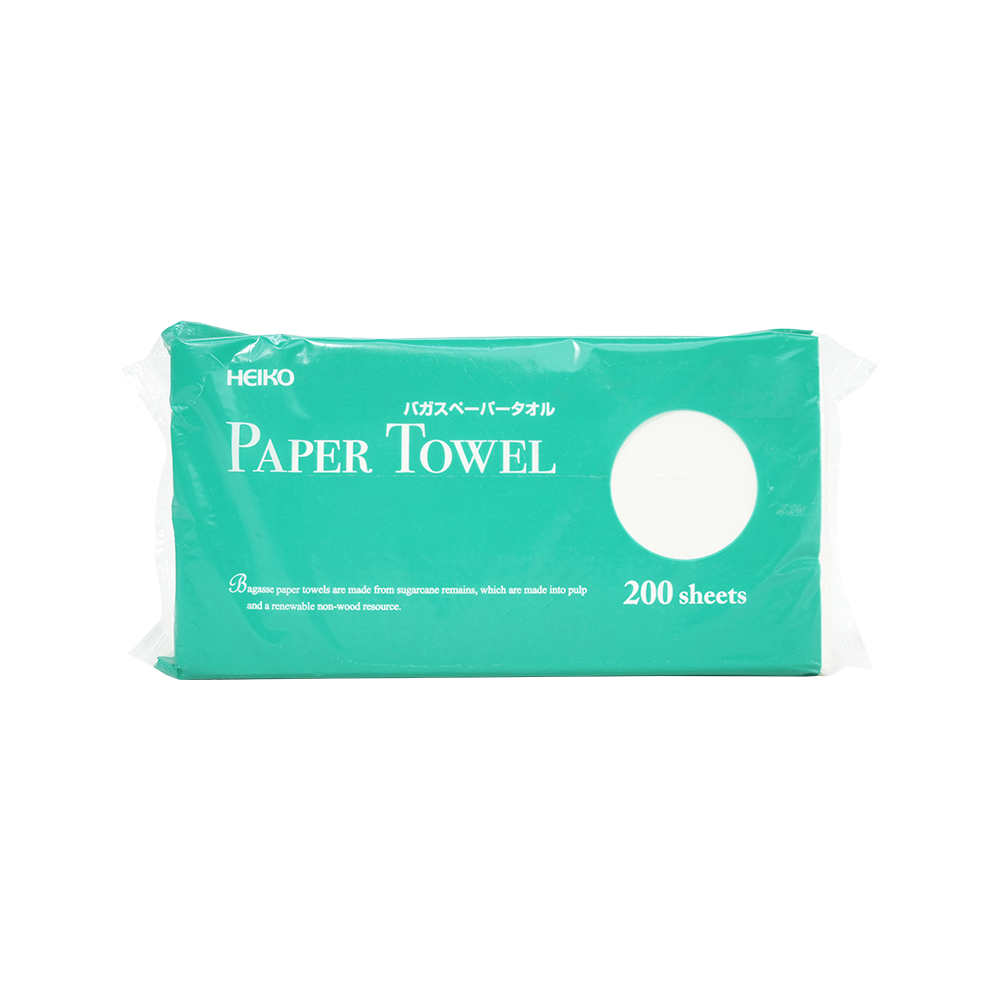
For away-from-home buyers, the sugarcane hand towel range is a direct example of a non-wood sheet that is chlorine free by sequence rather than by certificate.
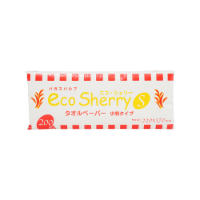 Sugarcane Pulp Hand Towels for Away-from-Home BuyersA non-wood, biodegradable hand towel option for away-from-home buyers, with soft absorbent sugarcane pulp and customizable weight, size, and packaging.View Product →
Converters who need the semi-finished route rather than a finished consumer pack can start from the mother roll format, which is shipped for rewinding and cutting closer to the end market.
 45g Kitchen Paper Towel Roll in 2-Roll PacksA heavier 45g roll for kitchen grease and moisture cleanup, supplied in convenient 2-roll packs and customizable in weight, size, and packaging.View Product →
Red Flags on Any ECF and TCF Supplier List
Most weak entries on a pulp producers list fail one of five checks, and every one of those checks can be completed before you order a single sample.
Most common inconsistency: a TCF claim paired with a 90 ISO brightness guarantee on hardwood kraft, with no ozone or peracetic acid stage anywhere in the description.
- The bleach sequence is described only by acronym, with no stages named.
- The certificate scope excludes the mill or the specific fiber line being quoted.
- Effluent and AOX data are replaced by a sustainability sentence.
- No brightness reversion data for a TCF grade that will sit in a humid warehouse.
- TCF offered at ECF price, with no tonnage allocation behind the quotation.
None of these gaps means the supplier is dishonest. They usually mean the entry was copied from a group brochure by someone who has never stood next to a bleach plant.
Frequently Asked Questions
Is TCF pulp always more expensive than ECF?
Usually, but the gap on standard tissue grades is smaller than most buyers expect, and it widens sharply when you need a specific brightness at short notice. Treat the premium as an allocation cost rather than a chemical cost.
Is ECF pulp chlorine free?
No. ECF removes elemental chlorine gas but still uses chlorine dioxide, so low levels of chlorinated organic compounds appear in the effluent. Only TCF supports a chlorine-free claim on the pulp itself.
Where can I find a reliable list of ECF and TCF pulp producers?
Combine three sources: mill-level certificates, trade association member lists, and a direct technical questionnaire. Aggregator directories go stale quickly and rarely show whether a TCF line is actually running this quarter.
Does recycled pulp count as TCF?
Deinked recycled pulp is normally bleached with peroxide or hydrosulfite and is chlorine free in practice. TCF certification, however, is written for virgin pulp, so a recycled sheet is better described as chlorine free by process.
Screen the bleaching sequence first, the certificate second and the tonnage third. The label on the spec sheet is the last thing to check, not the first.

ADD:No. 38 Huipu Road, Baipu Town, Rugao City, Jiangsu Province
Contact us
-

Tel: +86-513-88579198 88572918
-

FAX: +86-513-88572818
-

Email: info@tojin.com.cn

Copyright © 2002 - 2024 Jiangsu MIOV Paper Co., Ltd. All Rights Reserved. Recycled Paper Towel Manufacturers

