

 English
 日本語
日本語 한국어
한국어Industry News
 Home / News / Industry News / Sugarcane Pulp Kitchen Paper Towel: Why It Absorbs Better & Lasts Longer
 Sugarcane Pulp Kitchen Paper Towel: Why It Absorbs Better & Lasts Longer
 2026.05.20
 Industry News
Content
- 1 What Makes Sugarcane Pulp Kitchen Paper Different
- 2 Absorbency: The Numbers Behind the Performance
- 3 Oil Absorption vs. Water Absorption: Why Both Matter
- 4 The Environmental Case — Beyond Marketing
- 5 Practical Buying Criteria: What to Check Before You Order
- 6 Who Should Prioritize Sugarcane Pulp Kitchen Paper
Most kitchen paper towels fall apart the moment they meet hot grease. Sugarcane pulp changes that equation — not because it's trendy, but because the fiber structure works differently. Here's what you need to know before your next purchase.
What Makes Sugarcane Pulp Kitchen Paper Different
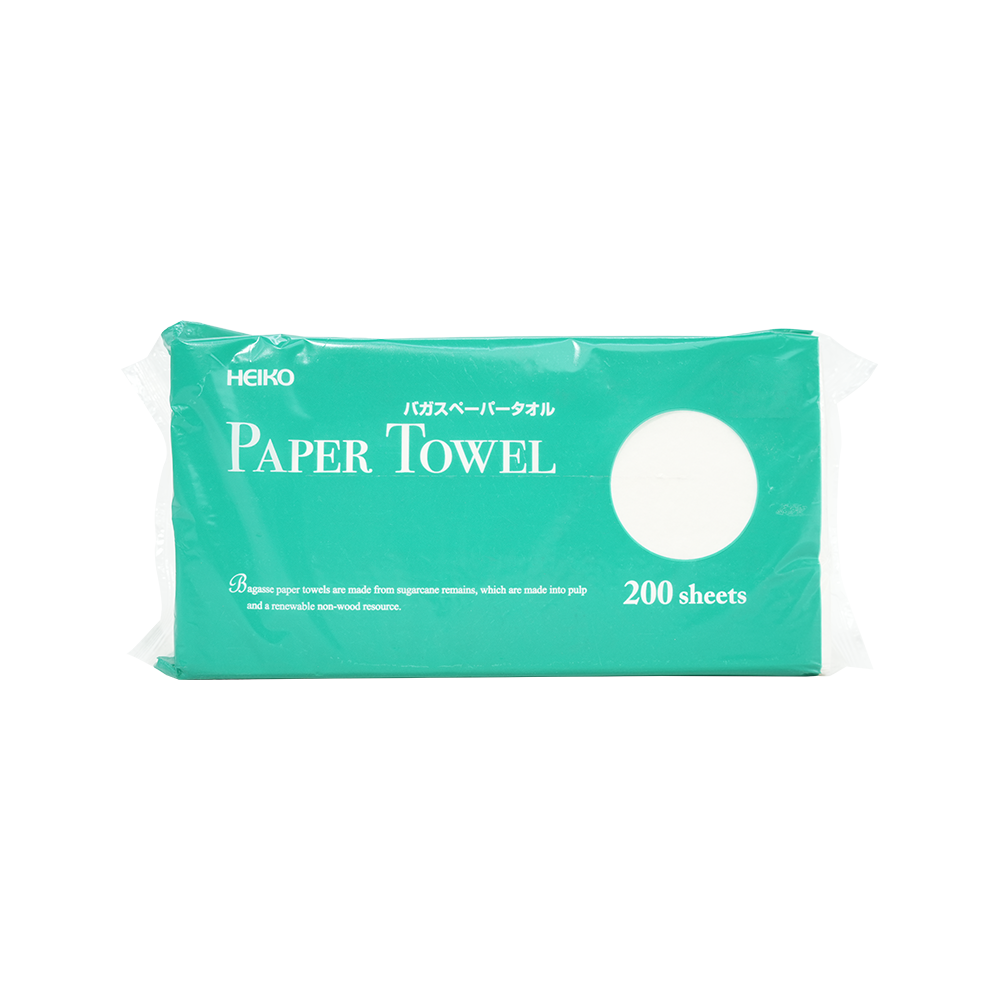
Sugarcane pulp, also called bagasse, is the fibrous residue left after juice is extracted from sugarcane stalks. Instead of going to landfill, this agricultural byproduct is processed into paper fiber — denser and more porous than standard wood pulp.
That density matters in the kitchen. Bagasse fibers create a tighter, more structured sheet that holds its shape under pressure, meaning the towel doesn't dissolve mid-wipe when you're dealing with oil splatter or a greasy pan. Regular wood-pulp towels tend to break apart on contact with fat-heavy liquids; sugarcane pulp towels maintain structural integrity throughout the task.
MIOV's strong oil-absorbent sugarcane pulp kitchen paper is purpose-built around this property — designed specifically for high-grease kitchen environments where standard tissue paper is simply not up to the job.
Absorbency: The Numbers Behind the Performance
Absorbency isn't just about how wet a towel gets — it's about how much liquid it captures per sheet and how quickly. Premium kitchen paper towels can absorb 10 to 15 times their own weight in liquid. Sugarcane pulp achieves this efficiently because bagasse has naturally high porosity, allowing liquid to wick into the fiber rather than spread across the surface.
For kitchen use, this translates directly into fewer sheets per spill. If a single sugarcane-pulp sheet handles what would otherwise require two or three conventional sheets, you're not just saving material — you're saving time and money. The full range of absorbent kitchen paper products from MIOV reflects this efficiency focus, with options calibrated for different kitchen volumes and task types.
Oil Absorption vs. Water Absorption: Why Both Matter
Most people think of kitchen towels purely in terms of water spills. But cooking generates two distinct types of mess — water-based (broth, juice, steam condensation) and fat-based (olive oil, frying grease, butter). These require different fiber behavior.
Water-based liquids spread quickly and respond well to hydrophilic fibers. Oils are slower, denser, and require a sheet that can hold the liquid without releasing it when pressure is applied. Sugarcane pulp performs well across both categories. Its fiber matrix is structured enough to trap oil without becoming saturated immediately, making it the more practical choice for actual cooking scenarios — not just the occasional countertop wipe.
| Property | Standard Wood Pulp | Sugarcane Pulp (Bagasse) |
|---|---|---|
| Oil absorption | Moderate — tends to smear | Strong — traps and holds grease |
| Wet strength | Weakens quickly under moisture | Maintains structure when wet |
| Sheets needed per spill | 2–3 sheets typical | 1–2 sheets sufficient |
| Biodegradability | Degrades, but slower | Faster breakdown, compostable |
| Raw material source | Virgin or recycled wood | Agricultural waste (no new trees) |
The Environmental Case — Beyond Marketing
Sugarcane bagasse starts as waste. The sugarcane crop generates it as a byproduct of juice extraction — no additional land use, no separate farming operation. That baseline already separates it from wood pulp, which requires harvesting trees, and from virgin bamboo, which requires new cultivation.
A lifecycle assessment published in the Journal of Cleaner Production found that bagasse-based products emit 65–80% less CO₂ over their production lifecycle compared to PET plastic alternatives. While that figure covers packaging broadly, the same feedstock and processing logic applies to bagasse kitchen paper. The raw material is waste biomass; the production energy requirements are comparatively low; the finished product biodegrades without special treatment.
This matters for buyers who want sustainable sourcing without sacrificing performance. Sugarcane pulp kitchen paper doesn't ask you to trade durability for environmental credentials — it delivers both.
Practical Buying Criteria: What to Check Before You Order
Not all sugarcane pulp kitchen paper is equivalent. Manufacturing quality varies, and a low-cost option that falls apart on contact with oil defeats the entire purpose. Here's what to evaluate:
- Sheet weight (gsm): Heavier sheets absorb more and hold shape longer. For commercial kitchens or heavy-use home cooking, prioritize options with higher gram-per-square-meter ratings.
- Ply count: Two-ply construction significantly improves strength and absorbency over single-ply. Most professional-grade sugarcane kitchen paper is 2-ply.
- Perforation quality: Clean tear lines prevent wastage and allow portion control — you use exactly what you need, nothing more.
- Wet strength retention: A reliable kitchen paper should not disintegrate under sustained moisture contact. Test by dampening a sheet and applying light pressure; it should hold together.
- Certification: Look for food-safe certifications, particularly for paper that will contact cooked food directly or be used for draining fried items.
MIOV supplies both OEM and wholesale sugarcane pulp kitchen paper manufactured to consistent specifications, which is particularly relevant for food service buyers who need batch-to-batch reliability rather than variable consumer-market quality.
Who Should Prioritize Sugarcane Pulp Kitchen Paper
The performance advantage is most pronounced in high-grease, high-volume settings. Commercial kitchens, catering operations, and food processing environments benefit most — situations where a standard tissue simply isn't strong enough and where large quantities are consumed daily. Switching to a more absorbent sheet reduces total consumption, which offsets any per-unit cost difference.
For home use, sugarcane kitchen paper makes the most sense for households that cook regularly with oil, do a lot of deep frying, or specifically want to reduce environmental impact without compromising on how well the product performs. It's a straightforward upgrade — no change in habit required, just a better material doing the same job more effectively.
The choice between standard and sugarcane pulp kitchen paper ultimately comes down to what you're actually using it for. If your kitchen demands real oil absorption with a sheet that holds together under pressure, sugarcane pulp is the more honest answer — backed by the fiber science, not just the sustainability label.

ADD:No. 38 Huipu Road, Baipu Town, Rugao City, Jiangsu Province
Contact us
-

Tel: +86-513-88579198 88572918
-

FAX: +86-513-88572818
-

Email: info@tojin.com.cn

Copyright © 2002 - 2024 Jiangsu MIOV Paper Industry Co., Ltd. All Rights Reserved. Recycled Paper Towel Manufacturers

