

 English
 日本語
日本語 한국어
한국어Industry News
 Home / News / Industry News / Absorbent Kitchen Paper Explained: Sugarcane Fiber, Absorbency, and Smart Buying
 Absorbent Kitchen Paper Explained: Sugarcane Fiber, Absorbency, and Smart Buying
 2026.08.07
 Industry News
Content
The Real Test of Absorbent Kitchen Paper
You are cleaning up after frying, a sheet of kitchen paper pressed over a slick of oil on the stovetop. In one motion, the sheet lifts the oil, holds it, and does not shred. That is what absorbent kitchen paper is supposed to do, yet many products fail at exactly this moment. Absorbency is not about how a roll looks on the shelf; it is a measurable property shaped by fiber type, sheet structure, bonding, and basis weight. As a manufacturer that has supplied tissue products to Japanese trading houses and restaurant chains for nearly two decades, we have learned that buyers who understand these variables make better purchasing decisions and lower their true cost per use.
What Makes Kitchen Paper Absorbent?
Absorption happens through capillary action. Liquid moves into the network of spaces between cellulose fibers, and the sheet holds it as long as those pores stay open and the wet structure remains intact. A genuinely absorbent sheet balances two competing needs: enough open volume to take in liquid quickly, and enough wet strength to keep that liquid from leaking out when the sheet is lifted or squeezed.
Fiber Type
The fiber is the starting point, and different pulps produce very different pore structures. The common options are:
- Virgin wood pulp — Long softwood fibers provide strength; shorter hardwood fibers add smoothness. Most standard kitchen paper uses a blend of the two.
- Bamboo pulp — A fast-growing non-wood fiber that forms a soft, naturally porous sheet. It absorbs water well but usually needs extra refining or reinforcement for demanding kitchen tasks.
- Sugarcane bagasse pulp — The fibrous residue left after sugar extraction. The rigid, naturally porous structure of bagasse keeps the sheet open and springy, so water and oil move in quickly. This is the main reason commercial kitchens increasingly specify bagasse-based paper.
- Recycled fiber — Short reprocessed fibers are economical and reduce waste, but they deliver lower and less consistent absorbency unless blended with longer virgin fiber or strengthened with bonding agents.
Sheet Structure, Creping, and Bonding
Fiber alone does not determine performance. Creping crinkles the dried sheet into micro-folds, increasing surface area so liquid spreads into the sheet faster. Bonding agents hold fibers together without sealing every pore, preserving absorbency while adding wet strength. In multi-ply products, plies can be laminated together so they do not separate when saturated. A good example is the 22-gram glued compound sugarcane pulp kitchen paper, which uses careful lamination to make two light plies act like a much heavier sheet during grease cleanup.
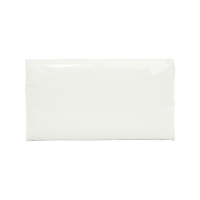 Wholesale 22g Glued compound sugarcane pulp kitchen paper Suppliers, OEM/ODM FacMIOV is China wholesale 22g Glued compound sugarcane pulp kitchen paper Suppliers and 22g Glued compound sugarcane pulp kitchen paper OEM...View Product →
Basis Weight and Ply Count
Basis weight, expressed in grams per square meter (gsm), directly influences capacity. A 45 gsm sheet holds more liquid than a 22 gsm sheet made of the same fiber, but ply design changes the comparison. Two 22 gsm plies bonded together can create internal channels that trap liquid differently from one solid 44 gsm ply. That is why a large-looking roll can perform poorly if the gsm is low and the plies delaminate when wet.
How Sugarcane Pulp Compares with Other Fibers
Bagasse offers an uncommon combination of speed and capacity. Because the fibers are short, stiff, and slightly curved, they do not collapse into a dense mat the way heavily refined wood fibers can. The sheet keeps large internal voids, which is exactly what makes the paper feel absorbent and perform that way.
| Fiber type | Water absorption | Oil pickup | Wet strength | Eco profile |
|---|---|---|---|---|
| Virgin softwood pulp | High | Moderate | High | Virgin fiber, deforestation risk |
| Bamboo pulp | High | Moderate | Medium | Fast-growing renewable crop |
| Sugarcane bagasse pulp | Very high | High | Medium-high | Agricultural residue, renewable |
| Recycled fiber | Medium | Medium | Low-medium | Waste-reducing, needs reinforcement |
The practical result: a bagasse sheet typically pulls oil into its structure faster and traps it more securely than a wood-pulp sheet of the same weight. That is why foodservice buyers choose our strong oil-absorbent sugarcane pulp kitchen paper for frying stations and prep counters. For a more detailed explanation of the mechanism, you can read why sugarcane pulp kitchen paper absorbs better and lasts longer in daily use.
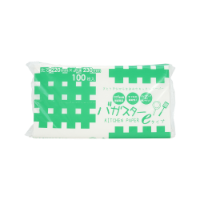 Wholesale Strong oil-absorbent sugarcane pulp kitchen paper Suppliers, OEM/ODM FMIOV is China wholesale Strong oil-absorbent sugarcane pulp kitchen paper Suppliers and Strong oil-absorbent sugarcane pulp kitchen paper...View Product →
How to Evaluate Absorbent Kitchen Paper Before You Buy
You do not need laboratory equipment to judge absorbency. Four simple checks reveal more than any print on the package.
- Water drop test. Lay a sheet on a flat surface and drop a teaspoon of water onto it. A well-made sheet pulls the water in within 1 to 3 seconds. If the water beads or sits on the surface, the sheet is too dense or has been over-treated.
- Oil pickup test. Pour one teaspoon of cooking oil onto a plate and wipe it with a single sheet. Count how many passes are needed to leave the plate visually dry. One or two passes is a strong result.
- Wet strength check. Hold the sheet under running water, then pull it horizontally with both hands. It should resist tearing for several seconds. If it comes apart immediately, it will fail on greasy messes.
- Weight and count check. Compare gsm and sheet count, not roll diameter. Two rolls of the same size can contain very different amounts of fiber.
Three buying mistakes produce most complaints. Buyers choose the cheapest roll by sheet count, confuse softness with absorbency, or use ultra-light kitchen paper for heavy frying operations. The better approach is to match the sheet's gsm and construction to the task. Our step-by-step kitchen paper towel buying guide compares absorbency, strength, and pulp options in more detail.
What Commercial Kitchens and Foodservice Buyers Should Consider
In a restaurant, absorbency is a cost line, not a preference. Every sheet that fails to finish a job means another sheet is pulled, which raises consumable expense and waste. Professional buyers focus on three factors: batch-to-batch consistency, packaging hygiene, and matching sheet format to the workstation.
Consistency Across Batches
A dependable supplier keeps basis weight and bonding within tight tolerances. If one batch absorbs 30 percent less than the previous one, staff will unconsciously use more sheets. Factories with dedicated production lines and ISO9001 quality systems, such as our facility in Jiangsu, provide the stability that high-volume kitchens need.
Format and Size Options
Interfolded sheets fit front-of-house dispensers, while roll formats suit prep counters and cooking stations. Offering several sizes lets a kitchen match the sheet to the job: a large sheet for pans, a smaller one for wiping plates. That is why a multi-size sugarcane pulp kitchen paper works well for operations that want one SKU across multiple tasks.
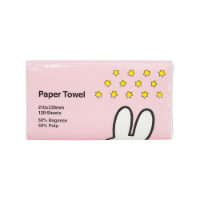 Wholesale Multi-size sugarcane pulp kitchen paper Suppliers, OEM/ODM Factory- JiMIOV is China wholesale Multi-size sugarcane pulp kitchen paper Suppliers and Multi-size sugarcane pulp kitchen paper OEM/ODM factory, Su...View Product →
Sustainability as a Procurement Criterion
Bagasse is an agricultural by-product, so using it avoids tree harvesting while adding a use for sugar mill residue. Recycled fiber plays a similar role, though it usually needs blending with stronger virgin fiber to perform reliably in kitchen tasks. Buyers aligning supply chains with environmental targets can review our sustainability commitments to understand how fiber sourcing and production are managed.
The Bottom Line on Absorbent Kitchen Paper
Choose absorbent kitchen paper by measurable performance: fiber type, gsm, ply construction, and wet strength. Sugarcane pulp consistently delivers the best combination of oil absorbency, water pickup, and renewable sourcing for demanding kitchens. For distributors and restaurant groups, buying directly from a factory that controls production and quality assures consistent supply and predictable cost per use.
Before your next order, run the water and oil tests described above. Ask your supplier for basis weight specifications, sheet count, and batch consistency data. And when sourcing from overseas, factor in production location and port access. A factory near Shanghai port, for example, shortens shipping time and makes delivery schedules easier to manage for large kitchen paper programs.

ADD:No. 38 Huipu Road, Baipu Town, Rugao City, Jiangsu Province
Contact us
-

Tel: +86-513-88579198 88572918
-

FAX: +86-513-88572818
-

Email: info@tojin.com.cn

Copyright © 2002 - 2024 Jiangsu MIOV Paper Industry Co., Ltd. All Rights Reserved. Recycled Paper Towel Manufacturers

