

 English
 日本語
日本語 한국어
한국어Industry News

Hand Paper Towels Buyer’s Guide | Materials, Absorbency & Bulk Buying
 2026.07.31
 Industry News
Content
A restaurant general manager stares at a spreadsheet of disposables and realizes that hand paper towels—a line item often dismissed as a commodity—are consuming 18% more budget than six months ago without any obvious change in usage. The culprit isn’t theft or waste; it’s a mismatch between the towel material and the environment it serves. For procurement professionals and business owners, selecting hand towels isn’t about choosing the cheapest option. It’s about understanding how fiber composition, absorbency, and cost-in-use interact across hundreds of hand dries per day.
How Material Choice Defines Performance
Hand paper towels fall into three primary categories based on fiber source: virgin wood pulp, bagasse (sugarcane fiber), and recycled paper. Each behaves differently under wet conditions, and those differences have direct consequences for your facility’s hygiene, waste generation, and total cost.
Buyers frequently confuse grammage with performance. A heavier towel (higher gsm) isn’t automatically better if its fiber network collapses when saturated. Instead, focus on two measurable attributes: water absorbency capacity and wet tensile strength. The table below breaks down typical material performance so you can align your choice with your highest-use areas.
| Material | Absorbency (g/g) | Wet Strength Retention | Typical Sheet Cost (Bulk) | Best Application |
|---|---|---|---|---|
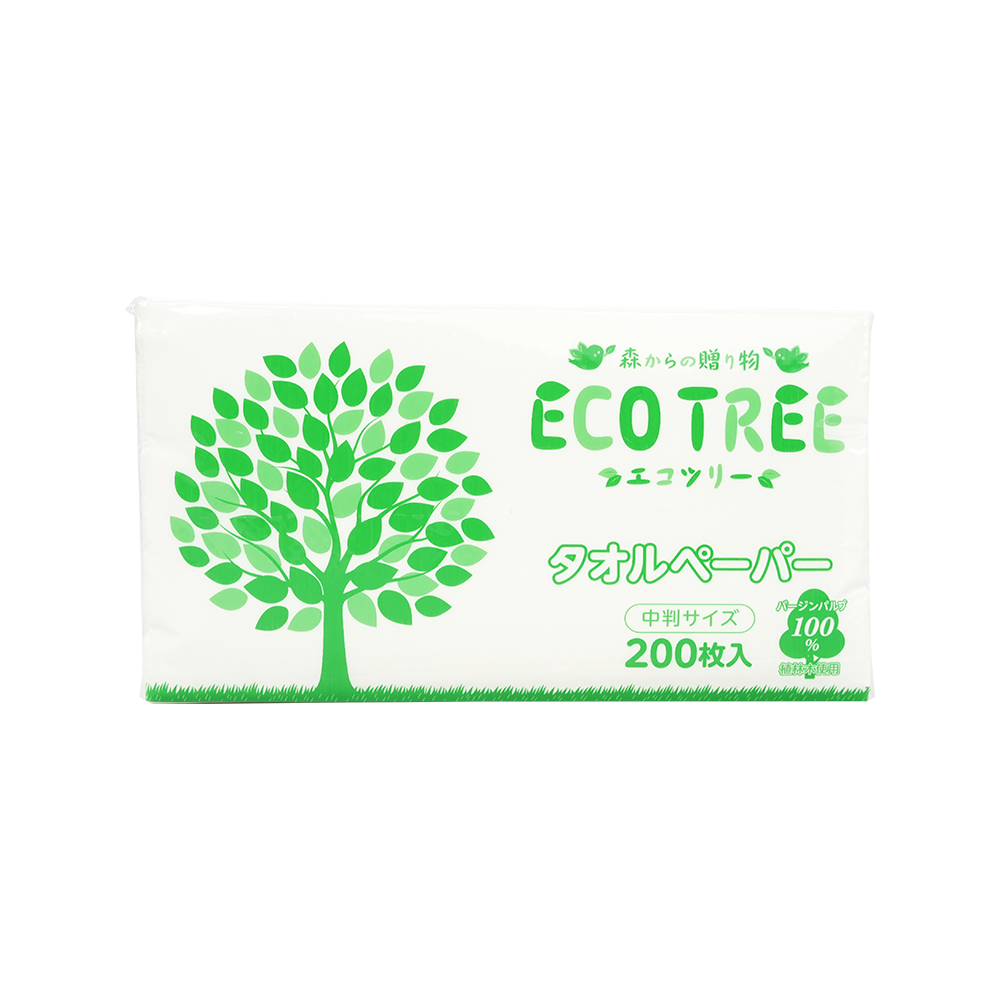
| Virgin Wood Pulp | 8–12 | 40–60% | Moderate-High | Premium offices, healthcare |
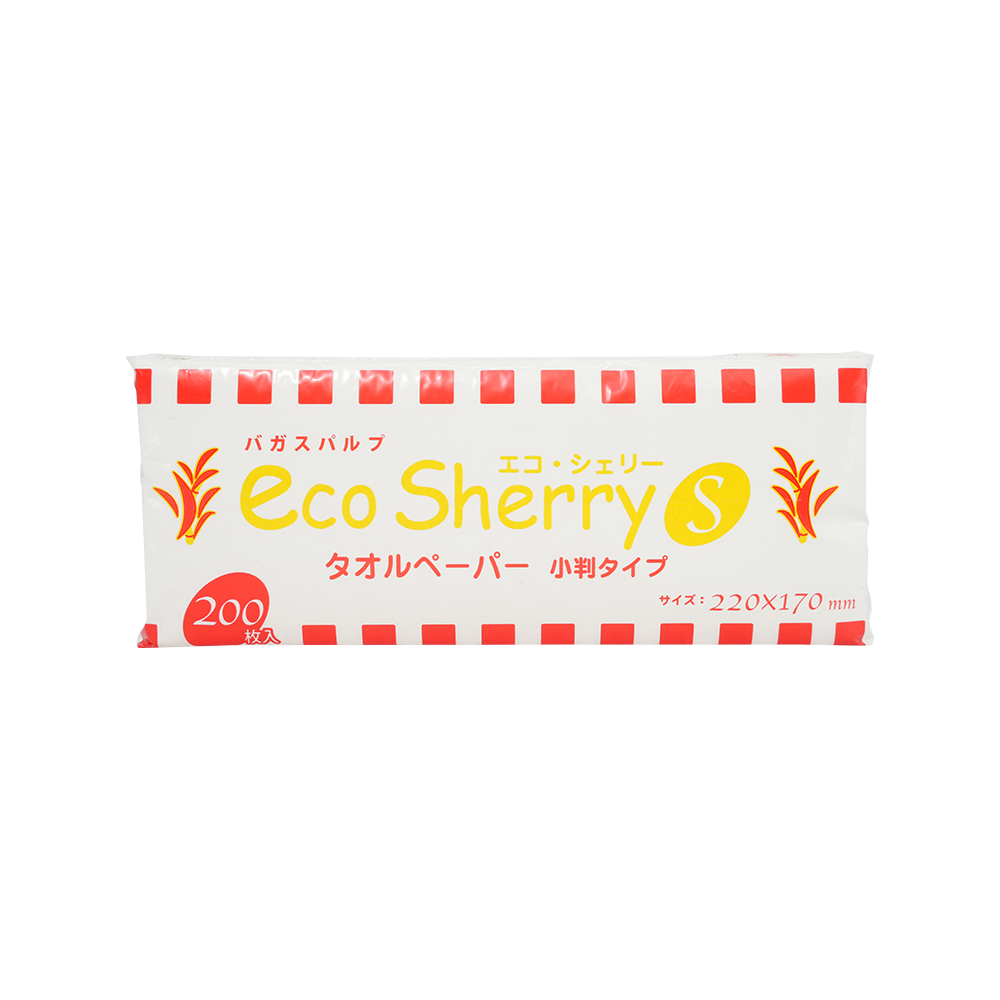
| Bagasse (Sugarcane) | 7–10 | 30–50% | Moderate | Food service, high-volume restrooms |
| Recycled Paper | 5–8 | 20–35% | Low | Warehouses, industrial sites, short-duration use |
Virgin wood pulp delivers the highest consistency in absorbency and strength, which translates into users taking fewer sheets per washroom visit. Bagasse offers a near equivalent with better sustainability credentials at a slightly lower price point. Recycled content, while environmentally appealing on paper, loses structural integrity rapidly when wet, often forcing a 2–3x sheet multiplier that erases its per-sheet cost advantage. When you run a facilities trial, measure sheets used per hand dry rather than the invoice price of a case.
Absorbency and Strength: What the Numbers Mean for Daily Operations
Absorbency is measured in grams of water held per gram of towel. Tests like the Klemm method or basket-immersion give figures that translate directly to real-world performance. A towel with 8 g/g absorbency needs only half the mass of a 4 g/g towel to achieve the same drying effect. In a 200-employee office, that gap generates more than 40 kg of additional waste per year from the weaker material, along with higher janitorial labor for restocking and bin emptying.
Wet strength retention—the percentage of dry tensile strength that remains after saturation—is equally critical. Towels with less than 30% wet strength tear during use, leaving fragments on hands and floors. This is especially dangerous in food-handling environments where paper debris can become a contamination vector. Bagasse towels, while having slightly lower wet strength than premium virgin pulp, still test within acceptable 30–50% retention ranges for general restroom use. Recycled products below 25% wet strength increase re-dosing and cleanup costs enough to offset their lower purchase price.
Matching the Material to the Environment
In a high-end hotel, the perception of quality justifies the top-tier cost of soft, thick virgin pulp towels. In a quick-service restaurant, the priority shifts to throughput and sanitation, where bagasse towels reduce fiber waste while maintaining hand hygiene compliance. In a manufacturing facility break room, the objective is often the lowest compliant option that doesn’t create a housekeeping burden—recycled may apply here if dispensers control sheet size and extraction labor is minimal. Write your specification around function, not brand.
Cost-Per-Use Analysis for Bulk Buyers
Purchasing departments that negotiate strictly on price per case often select the most expensive option when total consumption is accounted for. A simple cost-per-use audit requires tracking two numbers: the average sheets pulled per dry event and the cost per sheet delivered. One regional school district discovered that switching from a 1-ply recycled towel to a 1-ply bagasse towel increased per-case cost by 12% but reduced annual case volume by 28% because employees used fewer sheets. Net saving: 19% on their annual hand towel line.
Use this formula to compare any two options:
Cost per 1,000 dry events = (Average sheets per dry × Cost per sheet) × 1,000
Implement the formula during a two-week trial period with metered dispensers. Only then do the hidden costs of jamming, double-pulls, and user dissatisfaction become visible in the spreadsheets.
The Hidden Impact of Sheet Size and Dispensing
Not all savings come from material chemistry. A 23 × 23 cm sheet may dry as effectively as a 25 × 25 cm sheet if its absorbency is 20% higher. Pairing a C-fold dispenser that reliably delivers one sheet at a time with a medium-weight bagasse towel can cut total fiber usage by up to 35% compared to roll-based systems that encourage over-pulling. Before committing to a multi-year contract, test the dispenser-towel combination under actual foot traffic conditions for at least 10 days.
Beyond Material: Other Procurement Considerations
Smart purchasers evaluate more than fiber type. Four operational factors often outweigh a small difference in absorbency when you’re ordering 500 cases per quarter.
- Packaging and storage density. Case cube dimensions affect warehouse shelf space and freight cost. Compressed, flat-packed stacks can reduce shipping expenses by 8–15% compared to loosely packed bundles.
- Custom printing and private labeling. For facilities that want to reinforce brand image or provide usage instructions, some manufacturers offer embossing or water-based ink printing without compromising towel absorbency.
- Supply chain lead times. Bagasse towels sourced from regions with integrated sugarcane processing can have more consistent year-round availability than recycled grades that depend on fluctuating wastepaper markets.
- Certifications and compliance. If your organization pursues LEED credits or follows EPA Comprehensive Procurement Guidelines, verify post-consumer recycled content percentages or BPI compostability claims with third-party certificates, not just marketing copy.
Request a material data sheet from your supplier that includes grammage, absorbency (g/g), wet tensile, and brightness values. Any manufacturer unwilling to share these numbers cannot support your operational cost models.
Making the Final Decision Based on Data, Not Habit
Start your evaluation with the highest-traffic location in your facility. Install metered dispensers, distribute the two most promising towel materials you identified from the absorbency-strength matrix, and collect usage data for 14 days. Measure sheets consumed, waste bin weight, and user feedback where relevant. Then project the annualized costs. This method transforms a subjective “quality feel” discussion into a procurement decision that a finance director can approve in minutes.
Bagasse-based hand paper towels have closed the performance gap with virgin wood pulp in many applications, and they often win on total value when dispenser compatibility is fine-tuned. If your organization values sustainability metrics alongside cost control, bagasse presents a compelling midpoint. If the environment demands maximum strength and low linting—such as in laboratories or surgical prep areas—virgin pulp remains the safer specification. Whichever direction you choose, anchor it in a measured trial, not a catalogue description.

ADD:No. 38 Huipu Road, Baipu Town, Rugao City, Jiangsu Province
Contact us
-

Tel: +86-513-88579198 88572918
-

FAX: +86-513-88572818
-

Email: info@tojin.com.cn

Copyright © 2002 - 2024 Jiangsu MIOV Paper Industry Co., Ltd. All Rights Reserved. Recycled Paper Towel Manufacturers

