

 English
 日本語
日本語 한국어
한국어Industry News

Bamboo Fiber Tissues: Carbon Footprint Truth & Sustainable Buying
 2026.07.24
 Industry News
Content
- 1 The Carbon Footprint Debate: Why Bamboo Tissue Is Under Scrutiny
- 2 Beyond the Fiber: How Production Energy Shapes Real Sustainability
- 3 How to Identify Truly Low‑Carbon Bamboo Fiber Tissues
- 4 Does Bamboo Tissue Deliver on Comfort and Performance?
- 5 Making an Informed Choice: Bamboo Tissues in Your Daily Life
When a 2023 life‑cycle assessment from NC State University reported that bamboo fiber tissues produced in China can carry a carbon footprint roughly 30% higher than North American wood‑pulp tissues, it shook the eco‑conscious consumer’s confidence. Bamboo had long been marketed as the guilt‑free alternative—fast‑growing, renewable, and naturally antibacterial. Suddenly, the narrative seemed to flip. The question became urgent: are bamboo fiber tissues truly sustainable, or has their green image been overstated? Understanding the numbers changes everything.
The Carbon Footprint Debate: Why Bamboo Tissue Is Under Scrutiny
The Numbers Behind the Controversy
The NC State study put hard figures to a discomfort many sustainability advocates had long suspected: it’s not the plant itself that determines a product’s climate impact, but how and where it’s manufactured. The research compared the global warming potential of different tissue fibers across typical supply chains. Here is a simplified view of the per‑ton emissions that emerged.
| Fiber Type & Origin | Dominant Energy Grid | Approx. CO₂ per Ton |
|---|---|---|
| Bamboo (China) | Coal‑dominant | ~2,400 kg |
| Wood Pulp (North America) | Mixed / Natural Gas | ~1,824 kg |
| Bamboo (renewable‑energy plant) | Clean / Hydro‑solar | Comparable to wood pulp |
The takeaway is stark: when manufactured using a coal‑heavy grid, bamboo tissue loses its carbon advantage. However, the same research indicates that with a cleaner energy supply, the emissions gap between bamboo and virgin wood pulp essentially disappears. The fiber type alone doesn’t write the sustainability story—the energy powering the mills does.
Beyond the Fiber: How Production Energy Shapes Real Sustainability
This insight demands a shift in how we evaluate eco‑claims. Bamboo’s inherent environmental strengths remain valid. It reaches harvest maturity in three to five years, regenerates without replanting, and requires far less water than cotton. Its natural antimicrobial properties reduce the need for chemical treatments. But these advantages count only when the processing stage doesn’t cancel them out. A full life‑cycle view forces us to look at the factory, not just the field.
Here is where the consumer gains real leverage. When a tissue brand specifies that its bamboo pulp is processed in facilities powered primarily by hydropower, solar, or other renewables, the carbon footprint drops dramatically. Without that transparency, a bamboo label alone tells you nothing about climate performance. This is why a product’s manufacturing location and energy disclosure carry more weight than a generic “bamboo” stamp.
How to Identify Truly Low‑Carbon Bamboo Fiber Tissues
You can cut through the confusion with a simple checklist. Start with the production site—ideally a region with a clean electricity grid. Then verify the supply chain through credible certifications. Here is what matters most.
- Check the manufacturing location. If the packaging or brand’s website names a facility in a region known for high renewable penetration (e.g., parts of China with abundant hydropower or rapidly growing solar capacity), that is a positive signal.
- Look for third‑party certificates. FSC certification ensures responsible forest and plantation management; OEKO‑TEX Standard 100 confirms the absence of harmful substances; a verified carbon‑footprint label shows that the company has actually measured and disclosed its emissions.
- Insist on 100% bamboo pulp. Blends with wood pulp make it harder to track the carbon footprint and undermine the key advantages of bamboo fiber. Single‑fiber products are more honest and easier to audit.
For a deeper dive into verification criteria, our guide on what to look for in bamboo fiber tissues covers the packaging claims that matter and those that don’t.
Does Bamboo Tissue Deliver on Comfort and Performance?
Sustainability questions aside, a tissue still has to perform. If the sheets feel rough or disintegrate mid‑use, no carbon‑neutral claim will save them. Fortunately, bamboo’s physical properties translate into a genuinely soft, strong product. Its fibers are naturally long and smooth, creating a surface that feels softer than regular tissues made from shorter, stiffer recycled fibers. That softness isn’t just a luxury touch—it matters for sensitive skin.
Bamboo’s innate smooth structure means less friction and micro‑abrasion, which is why it has earned a reputation for benefits for sensitive skin. Users with eczema, allergies, or a tendency toward redness often find bamboo tissues less irritating during repeated wiping. Meanwhile, its absorbency, while not dramatically higher than premium wood‑pulp tissues, consistently outperforms standard recycled grades—making it a reliable choice for kitchen spills, makeup removal, and everyday cold care.
Making an Informed Choice: Bamboo Tissues in Your Daily Life
The carbon controversy doesn’t mean you should abandon bamboo tissues. It means you should choose them with your eyes open. A product that delivers both genuine comfort and a verifiable sustainability record is well within reach. The deciding factor isn’t the fiber name on the front of the box—it’s the energy story behind it.
When you select a 100% bamboo pulp facial tissue that comes with clear origin information and credible certifications, you are supporting a smarter, more transparent supply chain. You’re also backing a material that, at its best, combines rapid renewability with a genuinely gentle user experience. The era of blind faith in green labels is over. The era of informed, fact‑based choice in bamboo fiber tissues has just begun.
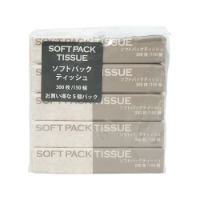 Wholesale 150 Pump/5p bamboo pulp double layer tissue paper Suppliers, OEM/ODM FMIOV is China wholesale 150 Pump/5p bamboo pulp double layer tissue paper Suppliers and 150 Pump/5p bamboo pulp double layer tissue paper...View Product →

ADD:No. 38 Huipu Road, Baipu Town, Rugao City, Jiangsu Province
Contact us
-

Tel: +86-513-88579198 88572918
-

FAX: +86-513-88572818
-

Email: info@tojin.com.cn

Copyright © 2002 - 2024 Jiangsu MIOV Paper Co., Ltd. All Rights Reserved. Recycled Paper Towel Manufacturers

