

 English
 日本語
日本語 한국어
한국어Industry News
 Home / News / Industry News / Wood Pulp Facial Tissue: A Complete Guide to Properties, Benefits, and Buying
 Wood Pulp Facial Tissue: A Complete Guide to Properties, Benefits, and Buying
 2026.08.14
 Industry News
Content
Wood pulp is the raw material behind most of the facial tissue used in hotels, restaurants, offices, and homes every day. It is also the fiber type that causes the fewest surprises on a production line. Softwood fibers give the sheet structural strength, while hardwood fibers create the smooth surface that users perceive as softness. When blended in the right proportion, these two fiber families produce a tissue that absorbs well, resists tearing, and holds its shape during use. For buyers who need consistent quality at a competitive price, wood pulp facial tissue remains the benchmark that bamboo and recycled alternatives are still measured against.
Why Wood Pulp Remains the Industry Standard
Facial tissue made from wood pulp has been in continuous production for more than a century, and the reason is practical rather than traditional. Wood fibers offer a combination of properties that are difficult to match with a single alternative source.
Softwood fibers, harvested from trees such as pine and spruce, are long and flexible. They interlock with one another and form a tough network that gives the tissue its wet strength and tear resistance. Hardwood fibers, typically from eucalyptus or acacia, are shorter and much finer. They fill the spaces in the softwood network, creating a dense, smooth sheet with a gentle surface. The blend is not accidental. A typical formulation for a quality facial tissue uses roughly 20 to 40 percent softwood fiber for strength and 60 to 80 percent hardwood fiber for softness, with small adjustments made to hit a specific price or performance target.
This tunability explains why manufacturers and buyers stick with wood pulp. If a customer needs a firmer sheet for a food-service dispenser, the ratio can shift. If a retail brand wants a silkier texture, the hardwood share increases. No other fiber source offers that level of control at the same scale and cost.
Performance Properties That Define Quality
Not all wood pulp facial tissue performs the same way, and the differences are measurable. Buyers who evaluate samples side by side usually focus on four characteristics.
| Property | What It Indicates | Buyer Impact |
|---|---|---|
| Softness | Surface smoothness and fiber fineness | Determines comfort for facial use and perceived premium quality |
| Absorbency | Speed and volume of liquid uptake | Affects how many sheets are used per task |
| Wet strength | Resistance to tearing when damp | Prevents collapse during wiping and nose-blowing |
| Bulk | Sheet thickness and cushioning | Adds a soft feel and improves dispensing reliability |
Softness is the most visible selling point, but it cannot be pursued at the expense of strength. A tissue that falls apart when damp is useless no matter how smooth it feels. Absorbency depends on both fiber type and the creping process, which creates tiny folds in the sheet that trap liquid. Bulk is influenced by the number of layers and the amount of air left in the sheet structure. A good wood pulp facial tissue balances all four rather than maximizing any single one.
How Wood Pulp Compares with Bamboo and Recycled Fiber
Most buyers who ask about wood pulp facial tissue are actually comparing it with two alternatives: bamboo pulp and recycled fiber.
Bamboo pulp is marketed as a fast-growing, renewable alternative, and it does have genuine environmental appeal. However, bamboo fibers are shorter and less uniform than wood fibers, so pure bamboo tissue tends to be weaker unless long synthetic or wood fibers are added. Recycled pulp is the most economical option, but repeated processing shortens the fibers, which reduces strength and softness and can make quality less consistent from batch to batch.
Wood pulp sits between the two in price and at the top in consistency. Virgin wood fibers are strong enough for thin, lightweight sheets that still perform well, which is why many food-service operators choose wood pulp for cost-per-use efficiency. For a more detailed comparison of fiber types, our guide on bamboo fiber tissue vs wood pulp facial tissue covers the trade-offs in depth.
How Wood Pulp Facial Tissue Is Made
Understanding the production process helps buyers judge whether a supplier is capable of consistent quality. The journey from wood to finished tissue passes through five main stages.
First, wood chips are cooked with chemicals to separate the cellulose fibers from lignin, producing pulp. The pulp is washed, bleached, and refined to reach the desired fiber length and flexibility. Next, the refined pulp is diluted with water and sprayed onto a moving mesh screen, where the fibers form a continuous sheet. The sheet is pressed and dried on heated cylinders, then passed through a creping blade that scrapes it off the cylinder in microscopic folds. These folds give tissue its stretch, softness, and absorbency. Finally, the tissue is rewound, slit, folded, and packed into the formats seen on store shelves.
Each stage affects the final product. Over-refining produces a dense, hard sheet; under-refining leaves it weak and linty. The creping process can be adjusted to create a gentle texture or a more utilitarian surface. Suppliers that control these variables tightly are the ones that deliver consistent wood pulp facial tissue order after order.
What to Check Before You Buy
Empty marketing language aside, a purchase order for wood pulp facial tissue should be based on specific technical specifications. Here are the checks that matter most.
- Ply count: Double-layer tissue is the standard for facial use. A single layer is usually too thin, while three layers add cost without proportional benefit.
- Basis weight: Measured in grams per square meter, this determines sheet thickness and strength. Common facial tissue range is 13.5 to 16 grams per square meter per ply.
- Fiber blend: Confirm the ratio of softwood to hardwood. Some suppliers adjust it to reduce cost at the expense of wet strength.
- Packaging format: Pump packs, flat packs, and folded formats affect dispensing compatibility and storage space.
- Price per sheet: Compare on cost per usable sheet, not per pack, to avoid paying for bulky packaging.
For buyers who need a proven product, our double-layer wood pulp facial tissue is a practical starting point. It uses a balanced fiber blend and is available in configurations suitable for both food-service and retail distribution.
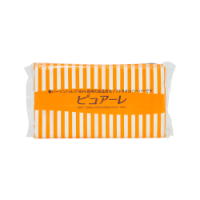 Wholesale Double layer wood pulp facial tissue Suppliers, OEM/ODM Factory- JiangMIOV is China wholesale Double layer wood pulp facial tissue Suppliers and Double layer wood pulp facial tissue OEM/ODM factory, Double-l...View Product →
Sourcing, Certifications, and Environmental Impact
Wood pulp facial tissue is often criticized for its connection to deforestation, but the reality depends entirely on where the wood comes from and how the pulp is processed.
Responsible manufacturers source pulp from certified plantations and managed forests, where new trees replace those harvested. Third-party certifications such as FSC and PEFC provide traceability from forest to finished product. Bleaching methods also matter: totally chlorine-free (TCF) and elemental chlorine-free (ECF) processes avoid the harmful by-products associated with older chlorine bleaching. Buyers should ask suppliers for documentation of both fiber origin and bleaching method before committing to a contract.
For companies with sustainability goals, wood pulp can also be blended with agricultural fibers or sourced from plantations that use land efficiently. Our sourcing approach is described in more detail on our sustainability page. Where a lighter sheet is sufficient, our small-weight all-wood pulp facial tissue reduces material input without sacrificing the core qualities buyers expect.
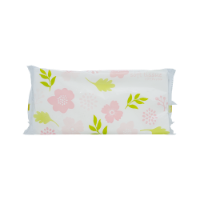 Wholesale Small weight all-wood pulp facial tissue Suppliers, OEM/ODM Factory- JMIOV is China wholesale Small weight all-wood pulp facial tissue Suppliers and Small weight all-wood pulp facial tissue OEM/ODM factory, ...View Product →
The right facial tissue is not the most expensive one or the one with the most appealing package. It is the one that performs reliably for the intended use at a cost the business can sustain. Wood pulp facial tissue continues to offer that combination better than any other single fiber source. When evaluating suppliers, ask for samples, compare the four properties listed above, and verify the fiber origin and production standards. A competent manufacturer will welcome that scrutiny because consistent quality is exactly what a wood pulp production line is built to deliver.



ADD:No. 38 Huipu Road, Baipu Town, Rugao City, Jiangsu Province
Contact us
-

Tel: +86-513-88579198 88572918
-

FAX: +86-513-88572818
-

Email: info@tojin.com.cn

Copyright © 2002 - 2024 Jiangsu MIOV Paper Industry Co., Ltd. All Rights Reserved. Recycled Paper Towel Manufacturers

