

 English
 日本語
日本語 한국어
한국어Industry News
 Home / News / Industry News / Away From Home Tissue Hygiene Market: A Practical AFH Buying Guide for Suppliers
 Away From Home Tissue Hygiene Market: A Practical AFH Buying Guide for Suppliers
 2026.09.23
 Industry News
Content
- 1 Market Size Signals: Read the Direction, Not the Decimal
- 2 Where Volume and Growth Actually Sit
- 3 Drivers and Restraints That Show Up Inside a Contract Term
- 4 Specifications and Tolerances to Lock Down Before Tendering
- 5 Cost per Use Beats Price per Carton
- 6 Back-of-House Kitchen Paper Sits in the Same Budget
- 7 Sourcing Risk, Lead Time and Supplier Depth
- 8 Sustainability Is Now a Written Specification
A hotel group switched hand towel suppliers to save 9% per carton. Three months later, housekeeping was logging twice as many washroom complaints: sheets tore at the perforation, and rolls ran out mid-shift because the new sheets were narrower. The invoice improved. The operating cost did not.
That gap is what the away from home tissue hygiene market actually trades in. AFH covers the tissue and hygiene products a business buys for other people to use: washroom toilet paper, hand towels, napkins, wipes, kitchen paper, and in wider definitions sanitary and incontinence products plus the dispensers that hold them. Food service, hotels, offices, healthcare, education and transport hubs all buy against a handful of highly visible line items where failure is noticed immediately. Price per carton is only one input.
Market Size Signals: Read the Direction, Not the Decimal
Published forecasts for this market disagree by more than a factor of three on growth, and the gap is definitional rather than arithmetic. Scope determines the number: whether napkins, wipes, incontinence products and dispenser hardware are counted, and whether "away from home" includes healthcare and education or only food service and offices.
| Source | Base-year value | Forecast | CAGR | Scope note |
|---|---|---|---|---|
| Mordor Intelligence | USD 47.16 bn (2026) | USD 65.91 bn by 2031 | 6.92% | Tissue and hygiene, broad channel coverage |
| Market.us | USD 42.5 bn (2025) | About USD 80.5 bn by 2035 | 6.6% | Includes wipes and incontinence products |
| TechSci Research | USD 37.94 bn (2025) | USD 58.81 bn by 2031 | 7.58% | Toilet paper, wipes, napkins, towels |
| Market Research Future | Not stated | 2025 to 2035 horizon | 2.3% | AFH tissue only, narrowest scope |
| Research and Markets | USD 31.5 bn (2024) | USD 37.5 bn by 2030 | 3% | Tissue products only, no hygiene |
Two conclusions matter for planning. Value growth in the mid single digits is the reasonable assumption through 2031; anything above 7% usually assumes a broader scope or a faster healthcare and wipes mix. And the widest-scope figures include products your tender may not cover at all. If your AFH budget is washroom tissue and hand towels, a headline number that counts incontinence products tells you nothing about your own price exposure.
Where Volume and Growth Actually Sit
Volume and growth do not sit in the same segments, and that split shapes supply planning.
- Product type: toilet paper holds the largest share of AFH volume; paper towels grow fastest, driven by washroom hand drying and food service wiping.
- Material: virgin wood pulp still dominates; recycled fiber is the fastest-growing band, with bamboo and sugarcane bagasse sitting between the two on price and performance.
- End user: restaurants and food service remain the largest single group; healthcare grows fastest under tighter hand hygiene protocols.
- Ply and quality: 1-ply and 2-ply commercial grades carry most volume; premium grades form a thin, higher-margin band.
- Channel: janitorial, food service and paper distributors still move most cases; contract e-procurement grows fastest.
For buyers, the practical point is that recycled and non-wood grades now sit in mainstream volume tiers rather than a niche, so they can be tendered inside the same specification structure as virgin fiber. They cannot, however, be swapped mid-contract without re-checking dispenser fit and absorption under load.
Drivers and Restraints That Show Up Inside a Contract Term
Four drivers recur in AFH procurement cycles, with two offsets working against them.
- Recycled content requirements. Public buyers and large hospitality groups write recycled or certified fiber minimums into tenders, pulling the supply base toward recycled and non-wood grades.
- Hygiene spending. Cleaning budgets expanded after 2020 have largely held, with washroom consumables treated as a visible service standard rather than a discretionary line.
- Hotel occupancy and return-to-office traffic. Both feed directly into washroom and breakroom consumption.
- Public sanitation rules. Local requirements for washroom provision in food service, healthcare and transport set a demand floor that price competition cannot remove.
Against that, electric hand dryers keep taking share in new-build and refurbished washrooms, particularly in offices and transport hubs, and pulp price volatility makes twelve-month fixed pricing uncomfortable for suppliers. Both restraints argue for shorter price validity windows and unit-of-use comparisons instead of multi-year fixed rates.
Specifications and Tolerances to Lock Down Before Tendering
Most AFH disputes trace back to a specification nobody wrote down. Fix these parameters in writing and confirm each one on a physical sample before the contract starts.
| Parameter | Typical commercial range | Why it matters |
|---|---|---|
| Basis weight | 22 to 26 gsm recycled towel; 34 to 42 gsm coated antibacterial | Sets absorption capacity and how quickly a sheet fails wet |
| Ply and construction | 1-ply embossed, 2-ply laminated, glued compound | Multi-layer sheets stay intact through a full hand dry |
| Sheet count and dimensions | 120, 150, 200 sheets; fixed roll and core diameter | Narrower sheets raise pulls per dry and consumption per washroom |
| Dispenser fit | Center-pull, multifold, roll towel, capsule, pump | A 2 mm core mismatch disrupts every refill cycle |
| Absorbency and wet strength | Water pickup and wet tensile measured on sample | Drives cost per dry, not cost per carton |
| Pack format | Capsule, pump, portable, three-dimensional wrap, bulk carton | Affects storeroom cube and staff handling time |
Public washrooms add a second layer of criteria: traffic volume, refill intervals and dispenser type. Those are worth agreeing with the operator rather than the distributor, and the same reasoning applies when you judge hand paper towel performance for public spaces.
For everyday washroom traffic, a biodegradable sugarcane pulp hand towel covers the standard case without a dispenser change.
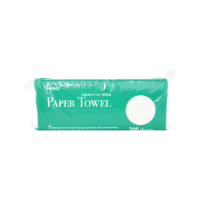 Biodegradable Sugarcane pulp hand towelsSugar cane pulp hand towels are usually hand towels made from sugar cane fiber as the main raw material. Paper towels made from sugar cane pulp are natural, renewable ...View Product →
Where hand hygiene is part of an audit trail, healthcare and food handling areas need a coated antibacterial grade instead.
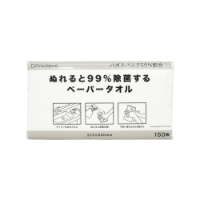 150-Pack coated antibacterial hand towelsEach pack of these coated antibacterial hand towels contains 150 sheets, which can provide a relatively long period of use and is especially suitable for situations wh...View Product →
Cost per Use Beats Price per Carton
Carton price is the least reliable comparison in this category. Convert every quote to a unit of use before ranking suppliers.
- Divide the case price by usable sheets to get cost per 1,000 sheets.
- Apply the real consumption rate. A lighter or narrower sheet can raise pulls per dry by 20 to 40%, which erases a 9% carton saving.
- Price the freight cube. Carton dimensions decide how many cases fit a pallet and a container, so identical case prices can differ by several percent landed.
- Add handling and damage. Capsule, pump and wrapped formats cut breakage and refill time; loose bulk cartons cost staff minutes every shift.
- Account for dispenser lock-in. If switching suppliers means replacing 200 dispensers, the contract is effectively multi-year.
Run this on two or three quotes and the ranking usually changes. The supplier that looks 8% cheaper per carton often loses once sheet width, carton cube and refill labour are included.
Back-of-House Kitchen Paper Sits in the Same Budget
Behind the pass, the performance that matters is absorption under load and resistance to shredding when wet. Sugarcane pulp grades, including glued compound multi-layer sheets, are chosen because they hold oil and water without breaking apart, while 22 gsm to 45 gsm mother rolls feed converters that rewind them into finished rolls. Both formats belong in the same AFH negotiation as washroom tissue, because they share raw material exposure and freight.
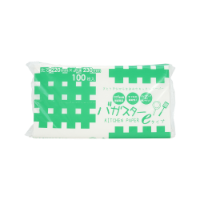 Strong oil-absorbent sugarcane pulp kitchen paperSugar cane pulp kitchen paper is a kind of kitchen paper made from sugar cane pulp as raw material. Sugarcane is a renewable resource, and by using sugarcane pulp, it ...View Product →
Sourcing Risk, Lead Time and Supplier Depth
Cross-border AFH sourcing is a logistics exercise as much as a manufacturing one. Pulp trades in a volatile global market, so a single fixed price held for twelve months usually fails in one direction or the other; index-linked pricing with a quarterly review is more durable. Lead time follows geography — a mill 120 km from Shanghai Port ships export orders with a short inland leg, while a plant further inland adds days and trucking cost to every container.
Production depth matters too. A supplier running multiple automated lines and exporting over a million cases a year into a demanding market has already absorbed quality-control lessons that a spot trader has not. When you shortlist, ask for the certification scope, the actual annual export volume by destination, and two customer references from your own segment.
Sustainability Is Now a Written Specification
Recycled content, bamboo and sugarcane bagasse have moved from packaging language into tender documents, and buyers increasingly request fiber origin, recyclability and emissions claims in writing. The defensible approach is narrow: name the fiber, ask how it is sourced, and test whether the claim survives a grade change mid-contract. The sustainability commitments behind a supplier's fiber claims are usually published away from the product pages, and they are worth reading before you shortlist.
AFH tissue is a low-drama category with a high cost of getting it wrong. The market will keep growing in the mid single digits, recycled and non-wood grades will keep taking mainstream share, and pulp prices will keep moving. What a buyer controls is the specification, the unit-of-use arithmetic and the depth of the supplier behind the quote. Get those three right and carton price becomes a detail instead of a gamble.


ADD:No. 38 Huipu Road, Baipu Town, Rugao City, Jiangsu Province
Contact us
-

Tel: +86-513-88579198 88572918
-

FAX: +86-513-88572818
-

Email: info@tojin.com.cn

Copyright © 2002 - 2024 Jiangsu MIOV Paper Industry Co., Ltd. All Rights Reserved. Recycled Paper Towel Manufacturers

