

 English
 日本語
日本語 한국어
한국어Industry News
 Home / News / Industry News / Eucalyptus Pulp: Fiber Properties, Tissue Applications and Buying Guide
 Eucalyptus Pulp: Fiber Properties, Tissue Applications and Buying Guide
 2026.09.18
 Industry News
Content
- 1 What Eucalyptus Pulp Is and Why Output Keeps Climbing
- 2 The Fiber Properties That Decide Tissue Quality
- 3 How Mills Blend Eucalyptus Pulp Into Tissue Grades
- 4 What Buyers Should Verify Before Signing a BEK Contract
- 5 Where Non-Wood Fibers Fit Into the Same Conversation
- 6 The Bottom Line for Tissue Buyers
Ask a tissue buyer why one facial tissue feels softer than the sample next to it, and the honest answer usually starts at the pulp mill rather than on the converting line. Eucalyptus pulp, traded mainly as bleached eucalyptus kraft pulp (BEK), has become the benchmark short-fiber hardwood pulp for soft tissue because it combines three things converters care about: high bulk, a smooth closed surface, and dependable absorbency from fibers short enough to run cleanly on high-speed tissue machines.
This guide explains what eucalyptus pulp is, which fiber properties actually decide tissue quality, how mills blend it into facial tissue and hand towels, and what procurement teams should confirm before committing to a supply contract, including the point at which non-wood fibers such as bamboo or sugarcane bagasse earn a place in the same blend.
What Eucalyptus Pulp Is and Why Output Keeps Climbing
Eucalyptus pulp is the fiber mass extracted from fast-growing eucalyptus trees. The grade most tissue converters buy is bleached eucalyptus kraft pulp: wood chips are cooked in the kraft process to dissolve lignin, then bleached, usually through elemental-chlorine-free sequences, to a brightness that typically lands between 88% and 90% ISO. The species behind most supply are Eucalyptus globulus in temperate regions such as Portugal, Spain and Chile, and grandis-urophylla hybrids across the large plantation estates of Brazil and Uruguay.
Two facts explain why this fiber keeps gaining share. The trees are fast: plantation eucalyptus is commonly harvested on 5 to 7 year cycles, against 25 years or more for northern softwoods, so fiber reaches the mill quickly and in high volume per hectare. And the papermaking behavior is genuinely good, with uniform fibers and a simple cell structure that mills can cook, bleach and clean efficiently. Global eucalypt pulp production roughly tripled over the past two decades, and market analyses project the bleached eucalyptus kraft pulp segment to keep growing at around 4.5% a year through 2029, driven largely by tissue and personal care demand.
The Fiber Properties That Decide Tissue Quality
The conclusion first: eucalyptus pulp wins on softness and bulk, not on strength. Its fibers average roughly 0.6 to 1.0 mm, short by papermaking standards, with thin cell walls and low coarseness. Short, slender fibers pack densely into the sheet, so eucalyptus furnish carries many fiber-to-fiber bonds per gram. That produces the smooth, low-lint surface that fingers read as soft, and it lets a mill hold sheet thickness at a lower basis weight, which is precisely what premium facial tissue demands.
More fibers per gram also build a finer capillary structure, so eucalyptus-rich sheets pick up water quickly and spread it evenly instead of channeling it. The trade-off is mechanical: on its own, the furnish has modest tensile and tear strength, which is why kitchen towels and public-washroom hand towels are nearly always blends rather than pure hardwood. The properties that matter most on a tissue machine are easy to list:
- Fiber length: about 0.6-1.0 mm, short and uniform, the foundation of softness
- Coarseness: low, thanks to thin cell walls, for a gentle hand-feel
- Bulk: high, so the sheet stays thick and lofty at lower grammage
- Absorbency: strong capillary uptake for fast, even wetting
- Tensile and tear: modest alone, reinforced with softwood fiber in demanding grades
How Eucalyptus Compares With Other Common Tissue Fibers
| Property | Eucalyptus (BEK) | Softwood pine | Bamboo | Sugarcane bagasse |
|---|---|---|---|---|
| Average fiber length | 0.6-1.0 mm | 2.5-4.0 mm | 1.5-2.0 mm | 1.0-1.7 mm |
| Fiber class | Short hardwood | Long softwood | Medium-long | Medium |
| Standout trait | Softness and bulk | Tensile and tear strength | Fast renewal, soft sheet | Cost and absorbency |
| Typical tissue role | Facial tissue, premium plies | Kitchen and hand towels | Facial tissue, toilet tissue | Kitchen paper, hand towels |
How Mills Blend Eucalyptus Pulp Into Tissue Grades
Blending is where the economics happen. Premium facial tissue can run at a very high hardwood share because skin feel is the priority and the converting line's embossing and lamination carry part of the structural load. Kitchen paper and hand towels typically add 20% to 40% softwood kraft for tensile and wet strength. Multi-ply structures push the logic further: an outer layer rich in eucalyptus delivers the surface the skin touches, while a stronger inner furnish handles pulling and scrubbing. A 15 gsm facial sheet and a 34 gsm coated hand towel may both contain eucalyptus, but the ratio and the layering are engineered for completely different jobs.
Process discipline matters as much as the recipe. Refining energy, creping ratio and Yankee coating all determine how much of the pulp's native softness survives to the finished roll, which is why two converters can buy similar BEK and ship noticeably different tissue.
What Buyers Should Verify Before Signing a BEK Contract
Eucalyptus pulp trades as a global commodity, so a specification sheet is only the starting point. In practice, five checks catch most problems before they reach your converting line:
- Brightness and cleanliness. Confirm ISO brightness, with 88% to 90% typical for BEK, and agree on a dirt-count limit per square meter, since visible specks turn into rejects on white tissue.
- Fiber consistency. Ask for fiber length distribution and coarseness data with each lot; a drift toward coarser fiber shows up within weeks as a rougher sheet at the same grammage.
- Certified origin. Request FSC or PEFC chain-of-custody documents and identify the plantation country, because origin shapes both lead time and your sustainability reporting.
- Price exposure. BEK prices move with pulp-market cycles and ocean freight, so lock volumes and review periods into the contract instead of accepting open-ended quotations.
- A fallback fiber. Qualify a second supplier, or a bamboo or bagasse equivalent, before you need one; single-source pulp is the fastest route to a lost production month.
Where Non-Wood Fibers Fit Into the Same Conversation
Bamboo and sugarcane bagasse have matured into credible substitutes for part of the hardwood fraction. Bamboo fiber sits between eucalyptus and softwood in length and builds a soft sheet on a 3 to 4 year harvest cycle, while bagasse, a sugar-mill byproduct, converts into absorbent kitchen and hand towels at attractive cost. For buyers exposed to BEK price swings, a partial non-wood blend works as both a supply hedge and a sustainability story. For a closer look at how the two families behave in finished products, see our comparison of bamboo fiber tissue and wood pulp facial tissue.
As a tissue manufacturer exporting to the Japanese market since 2007, we run wood-pulp and non-wood converting lines under one ISO9001-certified quality system, so the fiber is matched to the application rather than the other way round. Three examples from our current range show how a short-fiber hardwood profile translates into finished products:
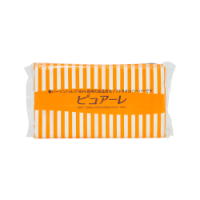 Double Layer All-Wood Pulp Facial TissueA two-ply wood pulp facial tissue offered in 17g and 11.5g weights with 100-sheet packs in 2-pack and 3-pack formats. As one of three finished-product examples, it shows how the mill's short-fiber hardwood pulp delivers softness and absorbency for retail and household channels.View Product →
 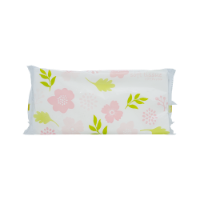 Small Weight All-Wood Pulp Facial TissueA lightweight all-wood pulp facial tissue with a softer hand feel, suited to face wiping and light cleaning in homes, offices and restaurants. Positioned here to demonstrate grammage flexibility, with packaging options customizable to different market requirements.View Product →
 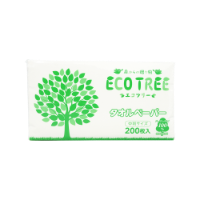 Tough All-Wood Pulp Hand TowelsAll-wood pulp hand towels combining strength and absorbency for effective hand drying, with high whiteness and no recycled fiber. Completing the three-product range, it extends the same fiber profile into a durable towel format for foodservice and higher-grade settings.View Product →
Grammage, ply count and packaging can be matched to your channel, from retail multipacks to foodservice cartons, and non-wood equivalents in bamboo and sugarcane pulp cover the same performance categories.
The Bottom Line for Tissue Buyers
Eucalyptus pulp earns its place in tissue for one reason: it turns fast-growing plantation wood into the softest, bulkiest sheet available per unit of fiber cost. Use it where the skin meets the sheet, reinforce it with softwood where strength decides the grade, and verify brightness, fiber data and certification on every contract. When supply risk or environmental targets push you to diversify, non-wood fibers from a converter that already runs both furnishes are the practical next step, and you can read how we approach responsible raw materials on our sustainability page.

ADD:No. 38 Huipu Road, Baipu Town, Rugao City, Jiangsu Province
Contact us
-

Tel: +86-513-88579198 88572918
-

FAX: +86-513-88572818
-

Email: info@tojin.com.cn

Copyright © 2002 - 2024 Jiangsu MIOV Paper Industry Co., Ltd. All Rights Reserved. Recycled Paper Towel Manufacturers

