

 English
 日本語
日本語 한국어
한국어Industry News
 Home / News / Industry News / Tissue Paper Industry News 2026: Fiber Costs, Tariffs, and Hygiene Trends
 Tissue Paper Industry News 2026: Fiber Costs, Tariffs, and Hygiene Trends
 2026.09.11
 Industry News
Content
At a procurement review in Osaka in June 2026, a restaurant chain purchasing manager compared two quotes for the same 26-gram recycled hand towel. The first quote, signed in April 2025, was priced at JPY 8,400 per case. The second, issued for the coming quarter, came in at JPY 9,580, a 14 percent jump with a three-week longer lead time. Nobody in the room was surprised.
That quiet acceptance says more about the tissue paper industry right now than any single headline. In 2026, three forces are doing the heavy lifting: volatile fiber costs, trade policy that keeps rewriting supply routes, and the normalization of sustainability as a hard purchasing specification rather than a marketing slogan.
Fiber Costs and the New Reality of Tissue Pricing
Pulp costs, not finished-product branding, are setting the pricing agenda for the rest of 2026. Market reports continue to show margin pressure across the supply chain: the world's largest pulp producer reported adjusted EBITDA of R$4.7 billion in the second quarter, while China's paper industry recorded a 13.6 percent profit drop in 2025 as weak demand collided with rising input costs. European mills have warned that high gas prices are eroding their competitiveness, and Canadian producers are facing tariffs that add uncertainty to every cross-border shipment.
For a buyer, the practical conclusion is simple: do not budget for stable wood-pulp prices. Instead, look at the fiber mix behind the products you specify. Virgin wood pulp is still the reference standard for softness and wet strength, but its price swings have made it a risky single-source strategy.
| Fiber | Source | Cost stability | Softness | Absorbency |
|---|---|---|---|---|
| Virgin wood pulp | Managed forests | Volatile | High | High |
| Bamboo pulp | Fast-growing grass | Moderate | High | Moderate-high |
| Sugarcane bagasse | Agricultural byproduct | Stable | Medium | High |
| Recycled fiber | Post-consumer paper | Stable | Medium | Medium |
Bamboo and sugarcane bagasse are no longer niche materials. They decouple your costs from the wood-pulp cycle while meeting the absorbency and strength targets that restaurant and hotel operators expect. A double-layer bamboo facial tissue, for example, delivers the same hand feel as a wood-pulp grade, and its raw material regenerates on a short agricultural cycle. The same logic applies in the kitchen, where grease and liquid handling test absorbency more aggressively. Sugarcane-based kitchen papers with glued composite structures can outperform wood-pulp rolls on oil pickup while using an agricultural byproduct.
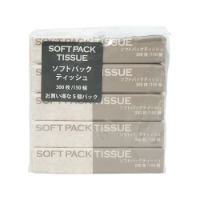 Bamboo Pulp Double-Layer Facial Tissue, 150 Sheets per PackThis lightweight double-layer bamboo facial tissue offers softness and absorbency while reducing reliance on wood pulp. Its 150-sheet packs suit home, office, or commercial use, and bamboo sourcing supports a shorter agricultural cycle.View Product →
Trade Policy Is Rewiring Supply Routes
Cross-border tissue purchases now face a thicker layer of trade friction than at any point in the past five years. Canada moved to impose duties of up to 50 percent on U.S. paper and tissue products; the United States responded with additional tariffs on Canadian pulp and paper. For North American buyers, the result is a renewed focus on country of origin. For buyers in Asia, the consequence is different: suppliers are increasingly redirecting capacity toward markets with predictable trade relationships.
Japan has been a stable destination for Chinese tissue manufacturers who built their export programs around Japanese trading houses and chain-restaurant specifications. That flow has persisted for more than a decade, and the manufacturers who sustain it bring a practical advantage: production lines, documentation, and quality-control routines already aligned to a demanding export standard.
For food-service operators, the practical question is whether a supplier can hold the promised schedule. Export-oriented manufacturers in eastern China, positioned within 120 kilometers of Shanghai's port, have kept steady delivery windows to Japan and other Asian markets even as trans-Pacific routes tighten. Buyers should still confirm that contracts define tariff classification and documentation responsibilities explicitly.
Sustainability Moves from Slogan to Specification
Sustainability has moved out of the brochure and into the purchase order. Scan any tissue industry news outlet in 2026 and the pattern is consistent: Kimberly-Clark is developing alternative natural fibers such as hesperaloe, Essity is expanding coreless technology to reduce packaging waste, and pulp producers are publishing sustainability reports built around circular-economy metrics. What matters for buyers is that these developments now appear in formal specifications, not just press releases.
Commercial specifications increasingly include recycled content, biodegradable materials, and certified fiber sources. The older question of whether bamboo fiber feels as soft as wood pulp has been answered in practice. Double-layer bamboo facial tissues and strong, biodegradable sugarcane hand towels now match the performance of conventional grades in commercial restrooms and kitchens. At MIOV, we built our export program on the same principle: non-wood pulp and recycled paper that reduce deforestation and carbon emissions while keeping per-case costs competitive. You can read more about how we apply these commitments on our sustainability page.
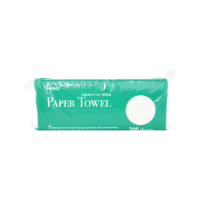 Biodegradable Sugarcane Pulp Hand Towels for Commercial UseMade from fast-growing sugarcane fiber, these hand towels are soft, strong, and biodegradable. They reduce deforestation and suit restrooms in schools, hospitals, or public facilities, with customizable weight and packaging options.View Product →
Hygiene Features Are Changing What Buyers Expect
Hygiene features, not just base paper quality, now decide which tissue products win commercial contracts. Antibacterial hand towels, once limited to hospitals and food-processing plants, are standard in restaurant washrooms, convenience stores, and corporate offices. Industry coverage in 2026 is full of practical questions: how do coated antibacterial towels work, what should a buyer look for, and when is the extra cost justified?
The answers come down to two variables: the coating chemistry and the base paper. A coated towel with a grammage of 34 to 42 grams keeps its wet strength through a full dispensing cycle, and a capsule pack fits counters where space is short. We covered the mechanics in more detail in a practical guide on how antibacterial paper towels work, but the short version is that buyers should test for wet burst strength and coating durability, not just read the label claim. Restroom technology is part of the same story: sensor-based dispensers and usage analytics have been shown to cut paper consumption by up to 40 percent in high-traffic facilities, changing the total-cost calculation more than the per-case price ever could.
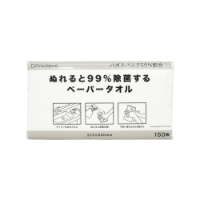 150-Pack Coated Antibacterial Hand Towels for HygieneEach pack contains 150 coated antibacterial towels designed to inhibit bacterial growth and maintain wet strength. Ideal for restrooms, medical settings, and food service, they combine absorbency with a hygienic wiping experience.View Product →
For a purchasing manager signing orders for the next two quarters, the implications are concrete:
- Treat fiber cost as a risk to be managed. Qualify at least one alternative-fiber product in every category you buy, so you can switch quickly when wood pulp spikes.
- Verify trade documentation. Country of origin, tariff classification, and export compliance are now part of the product specification.
- Put sustainability and hygiene requirements in writing, with test methods attached. Suppliers who meet those documents, rather than reacting to them, are the ones you want on the approved list.
The tissue paper industry news in 2026 is not about a single breakthrough. It is about structural change in fiber sourcing, trade routes, and buyer expectations. A simple pilot will settle the debate: run one week of your current product with a usage counter, switch to a qualified alternative-fiber product, and measure per-user consumption. In our experience, the cheapest case price is rarely the cheapest cost per dry hand.

ADD:No. 38 Huipu Road, Baipu Town, Rugao City, Jiangsu Province
Contact us
-

Tel: +86-513-88579198 88572918
-

FAX: +86-513-88572818
-

Email: info@tojin.com.cn

Copyright © 2002 - 2024 Jiangsu MIOV Paper Co., Ltd. All Rights Reserved. Recycled Paper Towel Manufacturers

