

 English
 日本語
日本語 한국어
한국어Industry News
 Home / News / Industry News / Kitchen Toilet Roll Guide: How It Differs from Toilet Paper and How to Choose
 Kitchen Toilet Roll Guide: How It Differs from Toilet Paper and How to Choose
 2026.08.27
 Industry News
Content
You wipe down a stovetop after frying, and the sheet in your hand dissolves into soggy shreds that smear grease instead of lifting it. In most kitchens, that sheet was toilet paper doing a kitchen roll's job. The two products look almost identical on the shelf: a cardboard core, white perforated sheets, nearly identical packaging. But they are engineered for opposite outcomes. A kitchen roll is built to stay intact when wet and to soak up water and grease. Toilet paper is built to fall apart in water within seconds so it passes through plumbing without clogging pipes. That single design decision explains the price gap between the rolls, which tasks each one handles well, and why flushing the wrong roll can block a drain.
What "Kitchen Toilet Roll" Actually Refers To
The phrase gets typed for several reasons. Most often it is shorthand for the roll of absorbent paper that lives beside the stove, a product you will also see called a kitchen roll, kitchen towel, or kitchen tissue roll depending on the region. Sometimes it comes from genuine aisle confusion, because roll-format paper products look interchangeable at a glance. Either way, the practical question underneath is the same: are a kitchen roll and a toilet roll the same thing, and if not, where does the difference actually show up?
The short answer is that they are not interchangeable. Use toilet paper on a greasy or soaking-wet mess and you will burn through half a roll and still leave residue behind. Use a kitchen roll in the bathroom and you pay towel prices for a job a cheaper sheet handles fine. And if either roll goes down the toilet, you risk a blocked pipe, because kitchen rolls are deliberately made not to disintegrate.
Kitchen Roll vs. Toilet Paper: The Differences That Matter
The distinction is not packaging talk. It is visible in the sheet itself, and three factors do most of the work.
Ply, bonding, and wet strength
Kitchen rolls usually use two or three plies with embossing between the layers, and heavier sheets hold more liquid. Weight is often printed right in the product name, and anything around 20 grams or more per sheet signals a denser, stronger paper. Some kitchen papers go further and laminate the plies together with an adhesive bond, a construction described as glued compound; those sheets keep their shape even when saturated. Toilet paper takes the opposite approach. Its fibers are bonded loosely on purpose so the sheet disperses in water almost immediately. That is a plumbing-safety feature, and it is exactly why a bathroom sheet collapses the moment it lands on a wet countertop.
Absorbency, additives, and food contact
A kitchen roll has to handle two very different liquids. Watery spills demand capacity, while grease demands surface structure that can hold oil rather than smear it, and embossing plus fiber choice decide how well a sheet manages both. Bathroom tissue is optimized for softness and dispersal instead. Scented or lotion-treated toilet paper also has no place near food preparation, because those additives were never intended for food-contact surfaces. Kitchen papers meant for food areas are produced with that exposure in mind from the start.
| Feature | Kitchen roll | Toilet paper |
|---|---|---|
| Typical construction | 2-3 plies, embossed, sometimes laminated (glued compound) | 1-3 plies, loosely bonded fibers |
| Wet strength | High; the sheet holds together when saturated | Low by design; disperses within seconds |
| Main absorbency target | Water and grease on counters, pans, and food | Water only, for personal hygiene |
| Additives | Produced with food-area contact in mind; unbleached options common | May include fragrances or lotions |
| Safe to flush | No; a leading cause of drain blockages | Yes, in working plumbing systems |
| Best-fit tasks | Wiping counters, draining fried food, polishing glass and appliances | Bathroom hygiene |
Can You Swap One for the Other?
Substitution questions come up constantly, so it is worth being precise about where the swap works and where it fails.
Toilet paper in the kitchen is acceptable for dry jobs: blotting washed lettuce, covering food in a microwave, drying clean hands. It fails on anything wet or greasy. Because the sheet disperses on contact with water, a single spill can swallow six or eight sheets, and grease pushes straight through the loose fiber. You often burn through more sheets than a single kitchen roll sheet would have needed, which cancels out the lower sticker price.
Kitchen roll in the bathroom works mechanically but wastes money. Per sheet, kitchen paper costs more, feels rougher, and adds nothing the task needs. More importantly, a kitchen roll should never be flushed: its wet strength is the entire point of the design, which makes it one of the most reliable ways to block a household drain.
If you want the full comparison, our guide on how a kitchen tissue roll differs from toilet paper covers flushability, additives, and sheet construction in detail.
How to Choose a Kitchen Roll That Earns Its Shelf Space
Once you know you need a kitchen roll, five criteria separate a good one from a frustrating one.
- Weight per sheet. Heavier sheets carry more fiber, which means more capacity and fewer sheets per spill. Names that state the weight, such as 22g or 26g, make side-by-side comparison easy.
- Ply and bonding. Two-ply is the workable minimum for daily use; three-ply or laminated (glued compound) sheets are the safer pick for saturated jobs like draining fried food.
- Fiber source. Virgin wood pulp, bamboo, and sugarcane pulp each bring a different balance of absorbency, texture, and cost. Sugarcane bagasse in particular absorbs well and starts as a byproduct of sugar production rather than freshly cut timber.
- Perforation quality. Clean, even perforations let you take half a sheet for small jobs, which is where most of the real-world savings happen.
- A quick water test. Press a corner into a bowl of water and lift it. A roll worth buying holds together and releases less water back onto the surface.
Sugarcane-based rolls show how far non-wood fibers have come in this category.
Strong oil-absorbent sugarcane pulp kitchen paper, made to lift grease off pans and stovetops instead of smearing it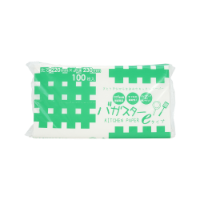 Strong Oil-Absorbent Sugarcane Pulp Kitchen PaperA kitchen paper roll made from renewable sugarcane pulp, offering good oil absorption and toughness for greasy or wet kitchen tasks. It fits this section on how non-wood fibers now perform in absorbent rolls.View Product →
Bonding matters just as much as raw fiber when a sheet has to survive a soaked job.
22g glued compound sugarcane pulp kitchen paper, where laminated plies add wet strength without making the sheet stiff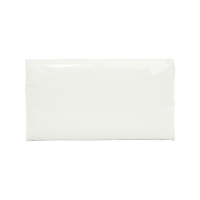 22g Glued Compound Sugarcane Pulp Kitchen Paper, 120 SheetsThis 22g sugarcane pulp roll uses glued lamination for added strength and durability, suiting soaked, demanding kitchen jobs. It appears here as an example of why bonding matters alongside fiber choice.View Product →
Between fiber and bonding, you can judge most rolls accurately before opening the pack, which is exactly what you want when buying by the case.
Fiber Choice, Sustainability, and What It Means for Cost
Kitchen rolls once meant one material: virgin wood pulp. That has changed, and the change is practical rather than cosmetic. Sugarcane bagasse is the fibrous residue left after juice is pressed from cane, so pulping it puts an agricultural byproduct to work. Bamboo regrows from its own root system after harvest and needs no replanting cycle the way felled trees do. Recycled fiber reduces demand for virgin pulp altogether. Unbleached or natural-color rolls also skip bleaching chemicals, which shortens the production chain and often lowers the cost per roll.
For volume buyers, these decisions compound quickly. Chain restaurants, hotels, and cleaning companies go through cases of kitchen paper every week, so fiber selection sets both the cost baseline and the consistency of performance. As a manufacturer that ships over a million boxes a year, with much of that volume going to Japan's food-service market, we treat fiber choice as the first quality decision rather than the last, and our sustainability approach explains how we source these materials.
The same logic reaches the bathroom roll, which is the paper product households replace most often.
A 200-pack recycled toilet paper with multiple gram weight options, for households that want the bathroom roll to match the kitchen roll on fiber choice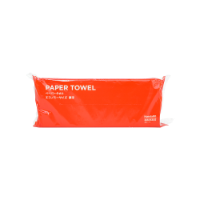 200-Pack Recycled Toilet Paper with Multi-Gram Weight OptionsA 200-pack toilet paper made from recycled paper with selectable gram weights for different household needs. It fits this transition to bathroom rolls, the product households replace most often.View Product →
The next time a label confuses you, run through three checks. Match the roll to the job, because grease and standing water need a kitchen roll. Keep both rolls out of the toilet unless the packaging says otherwise. And judge the sheet in your hand by weight, ply, and fiber rather than by the front of the package. Get those three right, and the roll on your counter does its work quietly in the background, which is exactly what good kitchen paper should do.


ADD:No. 38 Huipu Road, Baipu Town, Rugao City, Jiangsu Province
Contact us
-

Tel: +86-513-88579198 88572918
-

FAX: +86-513-88572818
-

Email: info@tojin.com.cn

Copyright © 2002 - 2024 Jiangsu MIOV Paper Industry Co., Ltd. All Rights Reserved. Recycled Paper Towel Manufacturers

